Full transcript of the conversation, published verbatim. Speaker labels come from the recording itself, not from an automated guess.
0:00 · Measuring Super Bowl commercial ROI for Aflac
Jordan Lally:0:27
Welcome back to the High Ticket AI Systems Podcast.
Everyone, please welcome one and only Mr. Guy Powell Guy. How are you doing today, my friend? Welcome to the show.
Guy Powell:0:36
I am doing just great and so glad to be here. Thank you for having me on.
Jordan Lally:0:40
Yes, sir, it's our pleasure. Now before we dive into all the fun nitty gritty questions, can you please give us in the audience some context as to what the company does and who you guys best help?
Guy Powell:0:52
Yeah, absolutely. So we if you think about a CMO and some of the critical decisions that they make and the fact that they if they make a big big bet, then they need to make sure that that big bet actually worked. So for example, we were working with with AFLAC and they one of their big bets was to do a Super Bowl commercial. And the big bet then was that very shortly after that Super Bowl commission, the C the Super Bowl insertion, they had to report to their their board on the Tuesday after the Sunday, and they said, guy, I need a response right away. What's did it work? And so the the CMO's butt is on the line and we then went into hyperdrive over the weekend and we were ready and Monday morning we started downloading data and stuff like that. And good news was by Monday night we determined that yes, the Super Bowl ad worked.
And she was able to report to the board that yes, based on you know our ongoing analytics, that we were able to first of all give her an answer, and then second of all, show that it worked, and third of all, hopefully saved her butt for at least another year. So that's that's the kind of stuff that we do. Very critical on the analytic AI. And now, of course, there's the combination of of gen AI with with the analytics stuff that's going on.
Jordan Lally:2:18
I wanna ask I amazing intro by the way. I wanna ask, do you know how much AfLag spent on that Super Bowl commercial? Cause I know they're pretty expensive.
Guy Powell:2:26
yes I do. Yes yes I do know. But that's all you're getting. But it was the it was
Jordan Lally:2:32
Okay, understood, understood.
Guy Powell:2:33
in the couple of millions, you know, absolutely it was in the couple of millions, so.
Jordan Lally:2:37
I mean every w everyone and and their dog is watching the Super Bowl, so I imagine it's you know, not it I imagine it's a pretty
Guy Powell:2:43
Yeah, yeah.
Jordan Lally:2:44
but I wanna ask, during that time, at least the Super Bowl and that Tuesday, were you guys looking at leading indicators to see if this was an actually a successful campaign? 'Cause I imagine people picked picked picked up the phone and they called, but doesn't necessarily mean like they signed up right away. You yeah you one eleven.
Guy Powell:3:03
Yeah, yeah. Well, in that particular case and and generally when you're thinking about how successful your media is gonna be, there's there's really two big dimensions. One is the number of impressions you get. And so as you can imagine, when you're watching the Super Bowl, you get a hundred and ten million at the time, maybe it's a hundred and twenty million now, impressions just for that that commercial. And and that's the number that you use. I mean a hundred and twenty million it's it's such a it's such a huge spike in in in in in impressions. But then the second piece is what did people do? Did they go to the website? Did they do searches? Did they do social? And so you also want to make sure you look at what the engagement was, because that then is kind of an indicator of the the relative value of the of the ad overall. Now the model that we had in place at the time looked at two things. It looked at the short-term value of the ad.
So, how many conversions did you get right away from it? And then the long-term value of the ad. Now, as you can imagine, for a high consideration product like AFLAC and insurance, the long term is more valuable and is a bigger item in terms of generating actual sales results. And so our model took that into account. And so we were able to, based on that, and based on that long term piece, give them a very good estimate of what that result was going to be.
Number one and then number two, we corroborated that six weeks later when we kind of had real data and were able to then incorporate that real data into the into the estimate.
Jordan Lally:4:39
You said the model that you guys were using w was AI involved in this at the time?
4:45 · Analytic AI versus generative AI in marketing
Guy Powell:4:45
Well i it depends on your definition of AI. So in in the current definition there's analytic AI. And so the model that we were using at the time is is an analytic AI and and so it was not gen AI, so it but more the analytic side. So building a what's called a marketing mix model, although we have some really fancy stuff that that we do to make sure that we incorporate the long term value of the brand into the short term value of the of the media as as well.
So in that respect, yes, analytic AI in today's parlance where people when when you say AI they generally mean the gen AI. And so at the time when we did that gen AI was wasn't even a twinkle in in anybody's eye.
Jordan Lally:5:33
So would you say that typically the work that you do is more so is it B to C, whether it's large data sets, or I guess who would you who would you describe as like best fitted for your solution?
Guy Powell:5:46
Yeah, definitely. so there's you know, you look at B to B, B to B to C and B to C. certainly the money is on the B to B B to C side. And so they're spending, you know, anywhere from ten to a hundred million or for larger companies which we don't target, but you know, ten to a hundred million or so. And for that you can really get some very good answers.
On the B2B to C, where you let's say that you're in the AFLAC case where you're selling through agents, and the agents then are the B2B side, and then but it's the consumer that actually purchases it, then you have a much more complex model, and we were building a model that took into account that agent piece as well as the consumer piece that was the person that actually bought the product. Similarly, for some of our other clients in insurance, where we are looking at a B2B to C model where we're looking at advertising and marketing to financial advisors and then the financial advisors giving them the tools and the messaging they need so that they can they they can sell very successfully to consumers or investors that are about to purchase an insurance of some kind. Now on the B2B side, a big B2B, then you get into a little bit of a different scenario. So even in the B2B to side C side But when you're doing B2B, you're looking at a sales team generally where you have a sales moderated selling process. And then what you want to do is you want to optimize the effort and the targeting that that salesperson has. And we do a lot of work in that area as well to make their this, you know, this highly expensive messaging unit, the salesperson, to make their time significantly more more effective.
7:33 · Hyper-personalizing B2B and consumer sales messages
Jordan Lally:7:33
I imagine that with your tool and your I want to call it a software at this point, but w with your tool, we're allowed to segment the data and really be hyper focused on okay, this segment really loves this thing about life. Let's have a hyper personalized message and approach this demographic with this said message. Is that kind of how that w that that would work?
Guy Powell:7:56
Well e exactly. And and we're actually getting much more into that because that that hyper personalization is definitely the the kind of the future. And if you can if you can meld that with the identifying the target and then hyper personalizing the message based on their prior behavior, based on their demographics, based on other things that are going on in the market, then you can hyperpersonalize that and you can significantly improve the effectiveness of that of that targeting now. And so that's where now we're seeing the combination of the analytic AI with the gen AI kind of on the front end to be able to drive significantly better gains. Now the real challenge though, especially in a regulated industry like in financial services or in healthcare, you have to be very careful because on those messages that are going out, typically a lawyer wants to approve them. And so you can't have a million different messages going out to a million different customers. So you also have to put some gating and some constraints on there to make sure that those messages are you know follow the regulatory requirements, follow the legal risk requirements, and nevertheless give you a a very personalized message so that that consumer That customer is gonna convert a mutt with a higher likelihood than otherwise.
Jordan Lally:9:23
One thing that I learned from this we can call him an online mentor, but he said if you fail to personalize your message in in one fashion or another, because there's no differentiation, you have now by defaulted landed yourself in categorization. And when people, consumers, put you in the same category as everybody else, that's death for a marketer.
The way he explains his personal congier shopping experience with Chanel is really, really it it just resonates with me. I know this is gonna be sound sound so funny, but especially if you spend enough money with the big brands out there like Louis Buton, Chanel, Gucci, etc., you get what's called the personal congierge. You have their direct line and you say, Hey, Johnny John, my personal congierge, I want to go shopping next Tuesday at four o'clock. Can you hook it up for me?
He's like, yeah, I got you. No worries, say less. Just just know that I got you. So around three o'clock, the personal congieres drives to Jeremy Haynes' house. That's the guy telling the story. Drives to their house, picks him up, takes him back to Chanel. Nobody else is in the store. He's having a one-on-one shopping experience with the personal congieres, and they're having a great time spending 150K, 200K on Chanel items. And he's like, yes.
I am a high-ticket purchaser. I spend boo-co bucks. But why can't we take that same concept and apply it to B2C? If you can do that, you will win in the game of marketing. And that really resonated with me. I was like, damn, that's good. I like that. So here I am, share the message with the audience.
11:01 · Using email personalization to bypass spam filters
Guy Powell:11:01
Yeah, exactly. Well that that pretty woman that comes to mind on that from the movie, when she goes to that personal shopping experience and and you know, gets the result and versus being kicked out of the store and with maybe let's say the non-personalized certainly the the conversion rates are gonna go higher. Now, of course, not all brands there's very few brands that are gonna be a a personal concierge, but in essence though, if you can Personalize the message, the offer, and the timing and everything else that goes with it, then your conversion rates are going to be significantly higher. And it's not only, you know, it's interesting, it's not only that, one of the challenges that you have, especially in email, is that Google blocks the non-differentiated messages. So if I send out an email to a thousand people, let's say.
And that content is exactly the same. Google the Google is going to raise a flag and say, this message is probably spam. And so then it gets delivered to the mail server of the company you're trying to reach or the individual you're trying to reach. And then that that then says, well, if it it looks like it's spam, so therefore it's going to go into the spam folder and it's not going to be seen. Now, what's f also fascinating is that the deliverability of that message is high because.
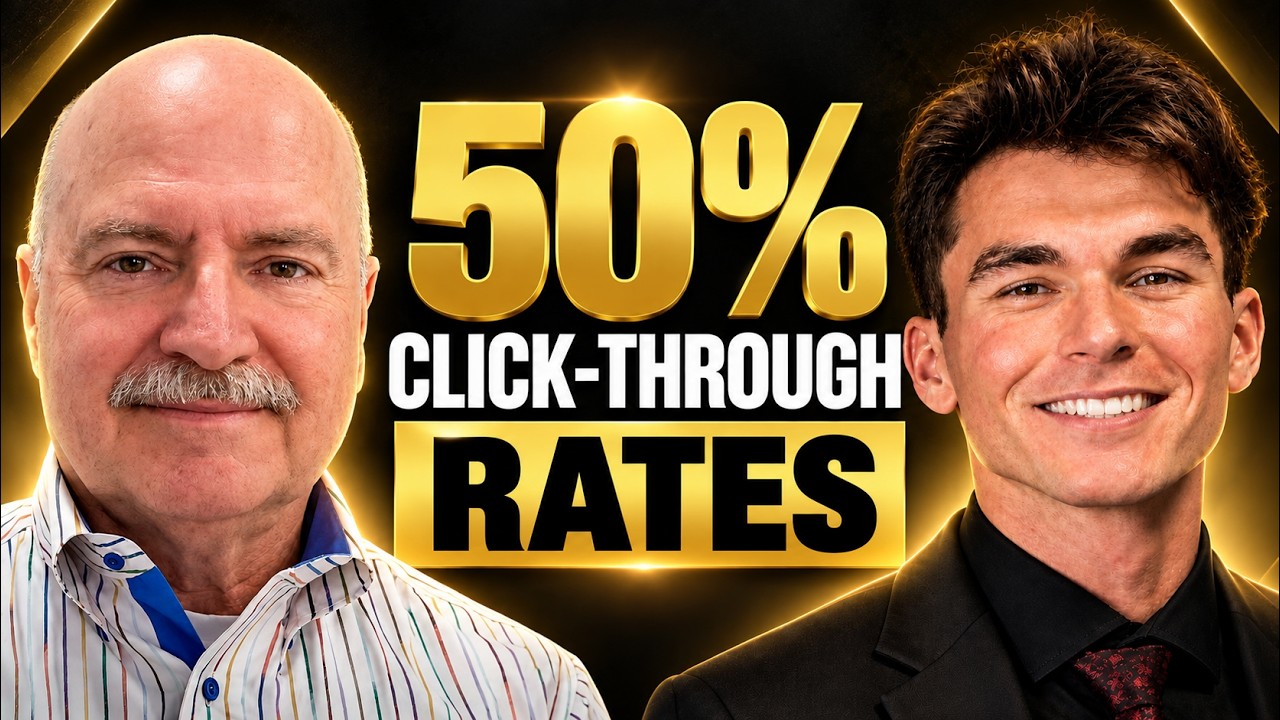
It got delivered to the mail server. It just didn't get delivered to the right place in the in the mailbox. So now if you deliver a highly personalized message, which has a differentiated subject line, a dip differentiated preview text, and a differentiated content, Google's going to say, well, this is just a one-on-one email. Let's let it through. So your deliverability is still high, but the deliverability from the mail server to the actual inbox. is now significantly higher. It's it's in you know going to be in the 70-80% range. And what I've seen, even on our own stuff, but also on our clients' stuff, is that their click-through rates go from maybe 0.1%, 0.2%, they go to 50%. And that's because they've used the personalization to get past some of the mechanical blocks that are out there, such as the Google, this Google spam filter flag that goes up.
So it it the the personalization overall just can drive significant advantage and and certainly then when the when the consumer sees it and says, yeah, I just bought from that company there. Yes, I love this this new blouse or whatever it is and it's in my favorite color. Wow, let me click on that and let me see what the what the offer is around that. So absolutely, that makes such a difference.
Jordan Lally:13:52
Sounds like you're very well versed in the email marketing space. Not everyone is. So just want to say hats off. You're absolutely right. We like to use what's called a spin tax. I I is your email marketing tips that you just shared, was that for B to C?
Guy Powell:14:08
That was for in my case it was B to B, but for one of our clients it's it's B to C.
Jordan Lally:14:16
Okay. Do you provide consulting advice on that? Essentially you'll work with that company from an analytical data perspective. You'll say, okay, here's essentially the data that we have. We'll utilize this data to then make email marketing campaigns. Are you doing the email marketing done for you, or is it more so like the consulting advice that comes with your services?
Guy Powell:14:40
Yeah, no, we're we're more on the analytics side. So we're not actually delivering or generating the email per se. we are giving them the analytics to deliver the email. Now the new thing that we are doing though is we are then developing the analytics and the gen AI so that we can then provide them the customized, hyperpersonalized message, and then that goes into their mail server and then that that then is what gets gets sent out.
So we're not actually sending the emails, but we're interfacing with the mail sending service like MailChimp, and then that that actually then gets sent out using their infrastructure.
Jordan Lally:15:20
Yeah, 'cause one thing about email marketing that I've learned over the years, just you know, being an email marketer, is that there's this thing called fingerprinting. Essentially, is even if you do send a very similar message across hundreds of thousands to of of recipients, and like sure use a spin tax, which is essentially different variables. Instead of saying this word, you say a very similar word and the meaning's the same. That's kinda what that's kinda
Guy Powell:15:48
Yeah. Yeah.
Jordan Lally:15:49
what it's. taxes. even if you utilize a spin tax, right? They they because the format looks the same, the word counter is very similar, you'll end up you'll end up on like the fingerprint list. Like this this email has been fingerprinted as like spam, which is like BS. It's like Google. Let me send my freaking emails, dude. But there of course of course there's ways
Guy Powell:16:06
Yes.
Jordan Lally:16:10
around that. You know, like you can send less emails per domain overall. But anyways, I I'm glad that you know email marketing it's pretty fun. Guys.
Really quick, correct me if I'm wrong. But you're an author, correct?
16:23 · Inside The AI Marketing Machine book series
Guy Powell:16:23
Yes. So yep, yep,
Jordan Lally:16:25
What is the
Guy Powell:16:26
and here's my book, the AI Marketing Machine. It's the third in a series of marketing machine books and and on on sale now you can find it at Amazon and other places, but primarily either as a Kindle book or as a print book. So the AI Marketing Machine, thank you for asking.
Jordan Lally:16:44
You're very welcome. What's inside that book, my man? What is that series about?
Guy Powell:16:49
Yeah, well, you know what's funny, I was not gonna write a book on AI because I was very afraid that by the time I got it out, that it would be six months old. Because it takes a long time to write a book. And but nevertheless, I had been doing I have a a podcast just like you do, and I'd been doing interviews and I said, Okay, well now I have I have data, now albeit it's textual data. and spoken data, but I have data that's very relevant to the market. And so I said, you know, I I ought to just use this and let AI help me to write it and summarize what's in there and then come up with a with a with a topic and a theme and some content and then what the real key bullets are and build it and build a book out of it. And that's then where this came from. So the idea of a marketing machine is that Marketing doesn't want to be just kind of like shooting from the hip. It doesn't want to be random in terms of, well, I got a great ROI on that campaign, but I got a lousy one over there. What the C suite wants and what the CMO wants is they want to know that if I put a million dollars in, that I'm gonna get with reasonable certainty, I'm gonna get some X times that in terms of sales and or of course profit.
And so now in a similar way, what I want to do is I want to be able to build a Gen AI engine, which is kind of what we've been talking about, is I want to build a Gen I Gen AI capability so that I can increase my overall effectiveness, use it with analytics, do it with it in a data way that I can prove to the C suite that I'm delivering, and use that as a way to to really beat the competition and grow faster than the category.
And that's then what the the goal of the book is. And there's some really good stuff in there and in terms of the personalization which we've been talking about and other things in terms of how do you improve your internal operations. And then lastly, how do you work against the governance and some of the regulatory challenges that you might have that you have to you just have to be able to get past in order for the marketing to really to really fly in in the in the marketplace.
Jordan Lally:19:11
When you have access to all this data, how else could it be utilized besides, you know, segmentation and personalization?
19:18 · Evaluating connected TV and programmatic ad performance
Guy Powell:19:18
Well, yeah, and I mean that and and that's of course what we're trying to do. And the data is everything and it it doesn't matter so in my case for the book it was textual data. for analytics it's actu it's actually structured data. So it's sales and media and impressions and all of that good stuff and engagement and clicks to the website and whatever. And you know, at a at a high level, what we've seen is at a high level y The first time we do the analytics, we give them some really big aha moments. And so, for example, we were working with a company just recently here and and they were a little bit afraid. They knew that CTV was working. And but you know, CTV, the the cost of an impression, so to speak, on CTV is pretty high. It's you know, maybe five or ten times higher than potentially other other channels. And yet The ROI that you get off of that CTV has to then be at least five or ten times higher so that you get a net positive out of it versus other channels. so that's the first thing. So the second thing is just just yesterday we were working with a client and they were doing some really, really cool stuff on their on their programmatic. And what they didn't realize though was that kind of the simple programmatic, very inexpensive on a per impression basis.
And that it even though it was so cheap, it wasn't working that well. And then when they did some very specific things like grabbing the whole page and I don't want to give away any, you know, any of the secrets, but you know, doing it doing basically a a page takeover and doing an interstitial and having it as a combo piece where you can, you know, either click on the content or click on the video there, that it really drove significant oral ga ROI gains for it.
And so having the data allows you then not only to do the top level stuff, but to really do a a good, valuable deep dive to say, yes, this is exactly what's working and here's why it's doing it, and then take that learning and then have the the marketing team incorporate that into their next round of their planning.
Jordan Lally:21:30
I feel like the biggest mistake I had as a young founder was when something worked, I had no idea why it worked. And when something failed, I'm like, why is this sh not working, dude? What's going on? But with data, you can get answers to both of those questions, right? You understand why it's working, whether it's there's so many different like topics of marketing, but you understand why it's working. And if it's not working, you can understand why it's not working with data. Let's see. When do you feel like It is the absolute best time for companies to stop relying on intuition and you know, making decisions from their gut essentially, and really start looking at the data. The the the black and white, the facts, the actual numbers. When when is an appropriate time for them?
Guy Powell:22:20
Well, in my mind it always is appropriate. Now I will admit for a a startup, there's some challenges in that just the amount of data that you have may not be there in what you need to really determine what's going on. But what I think for a a small startup is is critical is to build the infrastructure in their data gathering so that as they start to invest more and then they start to show off what they're doing to potential investors so that they can say, listen, we've built an infrastructure so that we can really be successful moving forward. The other thing that's interesting, and I was just talking to my partner about it, and we were one of the bigger challenges for a larger company is the tenure that the CMO has. So let's say I'm a new CMO and I just came on and I've got my you know $50 million budget for example and and I need to make a change.
The reason why they brought me on is because most likely the predecessor, you know, wasn't doing a good job. And so I need to be able to very quickly, once I've gotten through my honey p honeymoon period, that I can prove that I'm now driving the needle and I'm doing it significantly better than what was happening before. So that's that's number one. And y and maybe that's a six month time period. I think maybe the honeymoon for the CMO is six months and And the question is, is, you know, what have you done for me lately? You know, what's the marketing contribution to sales? And then after that, you need to continue to show that your contribution to sales is growing. And you know, you have to have the data infrastructure in place, you have to have the analytics structure in place, and you need to absolutely show that you're growing your contribution to sales higher than just because your your marketing budgets have potentially increase. And and that can only be done with analytics. I mean certainly you know the the CMO hopefully has some good operational experience and creative experience and and media buying experience. But if they don't show that they're growing the needle, driving the needle in terms of the the contribution that marketing is generating to sales, then then the question what have you done for me lately can be a a real killer.
24:47 · Viewing salespeople as customized message delivery channels
Jordan Lally:24:47
I love asking these questions to high level marketers. what's more important, marketing or sales? Or are they one of the same?
Guy Powell:24:55
Well, to me, and I know sales guys don't want to hear this, is that a salesperson is just a very customized way to deliver a message. Right? And you know, I could do, I could invest in, I can invest in a you know, in a banner ad, I can invest in a CTV ad, or I can invest in an ad that the salesperson takes to the customer. Now, certainly the salesperson is is maybe taking the order and stuff like that. but nevertheless, in reality, you ha as a marketer, as an analyst, you have to think of all the ways and all of the channels that a message is getting out to your customers. And the salesperson is just another message delivery system. Very customized, very personalized, but nevertheless it's just another way that the the message is getting out.
And so now the sales guys don't want to hear that of course, but in essence, when you're looking at analytics and marketing, you have to look at all of those all of those channels and you have to think about the the salesperson as a as just another messaging channel.
Jordan Lally:26:06
I am in full agreement with you. So I grew up when I was 18, I had my first insurance sales job. After six months, I sw swapped over to high ticket solar sales for a few years and then eventually founded my own agency. I I always thought I was a sales guy. But after
Guy Powell:26:24
Mm-hmm.
Jordan Lally:26:25
after about six years of doing this now, I love marketing. Like I I'm a marketer through and through way more than I'm a sales guy. But what I've realized, in my opinion, marketing.
Is is sales one to many when selling
Guy Powell:26:38
Yeah.
Jordan Lally:26:39
is is is marketing one to one or selling one to one? They're one of
Guy Powell:26:43
Yeah.
Jordan Lally:26:43
the same to wholeheartedly agree they are the exact same thing. now with that being said, I I imagine the answer is very important, but from your analytical point of view, how important is it for operations to relay what they are experiencing with sales?
So they can convey better messages when they're when they're selling the product. How important is it for sales to relay what's happening to the marketing department so we can optimize the messaging in our in our ads, in our in our go-to-market strategies?
Guy Powell:27:19
Yeah, and I I I think I'd have let me step back a second. I think one of the things that you really need to think about is that they're a good sales guy. They're a great I mean incredible sales guys in in some industries. I mean, in one with one of our clients, we've got some of their sales folks are making over a million a year. I mean, they're just awesome. And they just I don't know what it is, but they just know how to do it. And then you've got kind of the middle guys, which are good, but they're just not they're not the greats. And then of course you got, you know, kind of the bottom third and And those they're either new sales or new to the company sales folks. And and so it's kind of up to marketing to support all three of those. The best sales guys, when they get a new analytic tool or something from marketing, they just glom onto it and they know exactly what the what the value is. The media the middle guys, they sometimes you know squawk a little bit. Hey, listen, you know, I'm I love I love the term I'm I'm a belly-to-belly sales guy and And I'm gonna, you know, my it's my relationship that's gonna drive the business. And marketing, it's great to have you, but you know, it's all me. And then and so then no question that marketing can help them, but marketing has to be able to help them the bottom third, because it's that bottom third where you're spending a ton of time, a ton of money, and you're spending a ton of management time because you're trying to figure out, you know, how can I make these guys better?
What is it that's missing? Is it training? Is it the marketing message? Is it what is it? And how can I help them to target better or generate the messaging better? Give them better materials. And and so unfortunately, we spend so much more time on the bottom third than we do on the top third. And yet if I can make the top third ten percent better, I'm gonna drive sales significantly better than if I make the bottom third ten percent better. And yet from a management perspective, we're spending so much time down here. And but nevertheless the marketing has to be in the business especially in a B2B to C or in a in a very sales moderated kind of a high ticket sales environment they have to be able to sales they have to be able to support those three different groups of sales folks.
Jordan Lally:29:45
With that being said, do you feel like it's appropriate to consistently bring in new sales guys every two weeks and cut the bottom third? Like if you're not getting better, if you're not, you know, improving, you're done. I feel like it it yes, it is a hardcore sales culture. But at the end of the day, we're not here to make friends in business. We're here to make a profit if you're a for-profit company. So I'm a firm believer. If you're not performing, Sorry, you got you have to go. We will find somebody that is but or that will perform. Are you kind of similar with that mindset? Or I guess what what are your thoughts?
Guy Powell:30:23
Yeah, I mean unfortunately you have to be pretty cut and dried on that. Although I don't know about a two week cycle, but the cycle
Jordan Lally:30:29
Ha ha.
Guy Powell:30:32
the
Jordan Lally:30:32
Pretty quick.
Guy Powell:30:33
two week cycle is maybe a little short, but but the cycle though depends. I mean if you're if you're selling something that can be sold right over the phone and then maybe maybe two weeks is right. But if you're selling something that has a long sales cycle, then you have to somehow look at you know how that works. So for example, in my insurance case, their sales cycles are usually in the for that, you know, they're in the 90 days to 180 days. And so you still have to kind of get them past that. And then of course if the product is very complex, such as insurance or or what have you, then you really need to really need to make your training good and then make sure that they are fully armed.
And then after they're fully armed and you've given them the the right kind of tools and and also the the right kind of leads and what have you, then then that's when you need to start making that judgment. I remember my wife, and this is going back a little ways, but I remember my wife when she got her first job in in s in selling stocks, you know, s the you know, typical stockbroker. And she's her first day and she's talking to the the boss and says, Well, where's my leads?
And he reaches back and he takes this big huge phone book and says, Here you go. And so y you know, you that that lead thing, that w that was at the time that was probably what they were expecting. But nowadays, I mean, marketing has to deliver leads and that's where the quality of marketing can help those those new, especially the new sales guys. can help the new sales guys to get and grow a lot faster even though, you know, you you don't really know whether they're gonna be a great salesperson yet, but at least you can helpfully give them the tools to be able to grow them faster.
Jordan Lally:32:27
A firm believer that marketing either significantly helps your sales team or significantly hurts your sales team. But it can make their job easier or harder, depending on how good or quality the marketing message is. guy, I wish we had more time, but I want to ask you this one question here. You know, end of Q4, Q4 is coming up and of course 2027. What are some things that we have in the in the pipeline, or what are some things that are planned for the coming?
32:58 · Why CMOs must adopt AI before 2027
Guy Powell:32:58
Well, what I've seen and what we've been working on is as we s started our talk is the is the hyperpersonalization. I think that's gonna be coming at us a lot faster than we may be ready for it. And the other the other piece that's very very well tied to that is how do you as the CMO justify the investment in this hyper personalization? Because it's not cheap. is to how do you justify that because you know I could either take a million dollars and I could put it into a CTV ed or I could take a million dollars and put it into hyper personalization and I have to justify that to the Suisse C-suite because they're expecting they don't care they just want leads or they just want the business. I don't care how you do it. And so and and And so that right there is I think one of the biggest challenges that as we look forward to 2027 is that the the CMOs have to take that risk. They have to be a fast mover, because that is really the only way that they're going to grab market share. And if they're a slow mover and and not willing to take that risk, then they are not going to grow faster than the category. And if they're not growing faster than the category, then their job is at risk.
And I see that now, especially as AI, Gen AI, delivering hyper personalization and other benefits that if they don't jump on the bandwagon and be a fast mover, then they then their I think their job is at risk.
Jordan Lally:34:36
I think what you said is one hundred percent accurate. And we are moving at light speed. And if you're not adapting or improving your messaging, unfortunately it's not gonna be good for you. I wholeheartedly agree. All right, where can they find you, including the book, the website, social media?
Guy Powell:34:53
Yeah, absolutely. Thank you. I appreciate it. So I'm on LinkedIn and you can go LinkedIn slash in slash guy r powell. Guy R Powell and you'll find me on LinkedIn. my company is pro relevant. If you want to find out more about my book, go to marketing machine dot prorelevant.com, marketing machine dot prorelevant dot com and and you'll be able to download the first chapter. And of course, if you want to just go ahead and buy it, you can buy it right now on Amazon. You can either buy the the The Kindle version and listen to that, or you can buy the the you know the paperback version, which is what I've got right here.
Jordan Lally:35:32
Thank you so much for joining us, my man. I wish you the best of luck with the with the company and the books and the this overall life. thanks for joining us, my man. It was awesome.
Guy Powell:35:39
Thank you, Jordan. Really appreciate it. It's great to be on today.