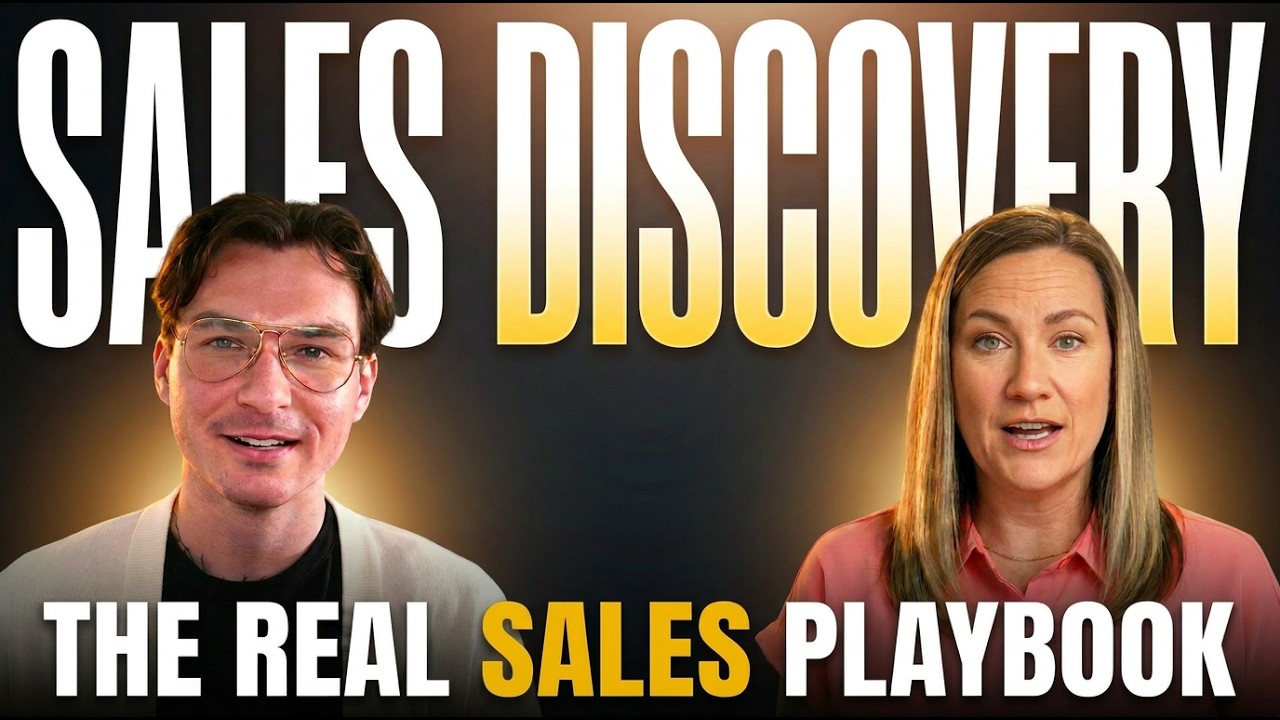
Full transcript of the conversation, published verbatim. Speaker labels come from the recording itself, not from an automated guess.
0:00 · — Introduction: Who is Sara Hanlon & what does Peer Sales Agency do?
Jordan:0:00
Welcome back to the High Ticket AI Systems podcast. Everyone, please welcome the winner now me. This is Sarah Hanlon. Sarah, how you doing today? Fantastic. know, busy day as we previously spoke, but that's a good thing. Things are emotion.
Sara Hanlon:0:08
I'm good, how are you Jordan? I love that.
Sara Hanlon:0:16
Yeah, for sure.
Jordan:0:18
For everyone that does not know essentially what your agency does, can you please give us a high level overview of what Peer Sales Agency does?
Sara Hanlon:0:26
Absolutely. So we like to work with professional services and technology companies and we do also work with manufacturing companies and we like to say that we're the marketing team that helps sales teams close more deals. So we focus a lot on revenue operations, we work with go-to-market teams, we help create go to market strategies and execute those for those teams. But our whole goal is to be the best marketing team for a sales team that they could ever hope for.
Jordan:0:59
That's interesting. So do you handle sales on behalf of clients or do you handle marketing that enables sales to become better?
1:07 · — Where sales ends and marketing begins (and why the lines are blurring)
Sara Hanlon:1:07
You know, the lines are blurring, right? It used to be that, like, if you had asked me when I started, Pierre, what were we? We were a marketing agency exclusively. But the revenue operations world, is blending sales, marketing, customer success all together and how they attack because we're all responsible for revenue. And so you know, for now, what I would say is we help, navigate with sales teams all the way from let's help you find those ICP fits and track them in, but then let's help you also nurture along once they're in the pipeline, like help you close those deals. So while we let sales do their thing, right, they're the ones in charge of that pipeline and that kind of thing, we are there to assist. So.
We do a lot of marketing activities, but we're very active and we love working with sales teams.
2:09 · — Sales vs. marketing: which one is more valuable?
Jordan:2:09
Gotcha. And I feel like sales and marketing go hand in hand. love proposing this question, which one do you think is more valuable, sales or marketing? And it's interesting to see people's answers. So let me ask you, what do you feel like is more valuable, sales or marketing?
Sara Hanlon:2:13
100%.
Sara Hanlon:2:23
Okay, so it's hard for me to say because I actually started as a salesperson. So my first job out of college was working for a pharmaceutical company and I worked inside sales, which we would now call BDR, right? I would smile and dial like legit. I had a CRM, telemagic, that's how old I am, but literally I had a list and I just called on them all day long. And then we sent faxes. this was like early 2000s, faxes and emails trying to get them to open accounts and buy from us. So that's how I started my career. And we had a marketing team that was like totally embedded with us. And so I think because that's been part of my origin story, right? And my ethos, it's just, I can't not see how sales and marketing are aligned. So I really don't. have a preference, like I genuinely am like it's one team, you just each have kind of little different responsibilities.
Jordan:3:27
That's a great answer. And I feel the same way. You cannot have one without the other. Like they are essentially the same thing. Sales predominantly is a one-to-one situation. Marketing is a one-to-many situation, right? You should get feedback from your sales team that loops back into the marketing to make better marketing and the fricking flow, you know, flows like that.
Sara Hanlon:3:31
Yeah.
Sara Hanlon:3:37
Yeah.
100%.
Sara Hanlon:3:46
Yes.
Sara Hanlon:3:50
Yeah, yes, I agree with you 100%. I wish everybody felt this way. I do think more people are starting to feel that way.
Jordan:3:52
you
4:00 · — Why you can't build a successful business by excelling at only one thing
Jordan:4:00
Yes, especially with done for you agencies because you can sure provide a service Fantastic. We love that you provide services. However, this is like holistic You know, is so many different angles that that we have to take in order for a business to become Successful. It's not like okay. I'm in Excel I excel at marketing but I can suck at sales and customer fulfillment horrible You're not gonna have a successful business, right? You need all
Sara Hanlon:4:05
Totally.
Sara Hanlon:4:27
Raise.
Jordan:4:28
three and many more to actually become successful. You want to shed some light on that? You agree?
4:31 · — How most B2B companies are still growing through "hand to hand combat"
Sara Hanlon:4:31
Yeah, agree. Yes. I feel like, yeah, I feel like we work so a lot of times when clients come to us, it's because they have been doing a lot of that hand to hand combat, right? They've been growing through relationships, they've been growing through their personal network, things like that, which we still see a ton of value in and no one, it's not like even when you bring a true like revenue program together, you're not going to stop doing those activities.
But at the same time, there are other channels where you can generate those deals from and everybody's better when you get clear of what your offer is, how you're touching them, those prospects throughout the customer journey, right? You're all benefiting from that activity and that feedback throughout because you're able to see where you can shorten the sales cycle, right? engage them more proactively. You can take advantage of some of those challenges that that customer is having because I mean, we live in the age of distraction, right? It's really easy to a prospect comes to you, they've got a real genuine pain, but priorities shift within the business and they lose track of why they were talking to you and now the deal is stalled. And so you have to kind of keep sales and marketing working together, you have to kind of stay in front of them. You've got to keep that momentum going so that that customer can actually solve their problem and not get distracted by all the moving pieces within their business.
6:11 · — How Sara went from cold calling with a fax machine to building a revenue agency
Jordan:6:11
No, absolutely. Absolutely. Great insights there. How did you manage to get into, I guess, rev ops if you started out being, you know, good old coal color?
Sara Hanlon:6:20
Yeah, ironically, so I worked in sales, worked through, started another inside sales team, then we launched, we launched a new product, and they needed someone to kind of own that. And so then I moved into product marketing for that organization, just because, you know, I knew how to sell it. So was like, they were like, you could go and build these products for us get into product marketing. So got into product marketing in that way, healthcare product marketing at that time was a lot of like, I mean, direct mail, a lot of trade shows, all those kinds of things. So that was like my background. And then I actually went and started working at an agency, a digital agency. And that was so eye-opening because I was able to go and see what you could do when you opened up At that time, digital was all relatively, not brand new, but it was really new. And so when you open up the capabilities in the digital world and attach them to some of those sales challenges, I was like, look at all these things you can do. And so that was kind of that other side, if you will, of how do sales and marketing work together? And so that was kind of my first foray of like, you bring those together, what does that look like? And at that time, right, there was that phrase people were throwing around, smarketing, right, sales and marketing, smarketing, yeah. So that was kind of like the, in my mind, that was kind of the germ of like what became revenue operations, but as technology evolved and more tools got in there and, you know, then it just became, okay, now this is more complicated, but also more valuable.
8:17 · — The B2B channels most companies are leaving money on the table with
Jordan:8:17
Gotcha. Okay. Thank you for the context there. You brought up a few talking points earlier. You said when you are working with clients, you understand the value of working their network and talking to referrals and making those warm intros. But there are a lot of other channels in the B2B world that I think are underutilized. Can you please elaborate on the channels you use behalf on your clients and where you found the most success working with your clients?
Sara Hanlon:8:20
Yeah.
Sara Hanlon:8:46
Yeah. So it's everything. So right now, you know, we're kind of going through a, I mean, it's the age of AI, right? And so we're actually seeing a lot of wins for our customer. And we started as like a sales enablement. You know, we really focused on let's make that customer journey as powerful as possible. And so when you're looking at a customer journey, it is about content. And so we were a content agency predominantly. And then as SEO and AEO came into the fold, we started going, how do we help attract more people to these sales teams? And so some of the ways that we've done that, I mean, we do paid media.
Everybody has kind of a paid media mix in there. But we are really looking at the depth of content and how you actually solve problems and talk about your unique point of view. We're seeing a lot of wins in that area where we can actually demonstrate to our customers, listen, these people found you through the LLM, right? And then as you know, Now there's all kinds of tools. We're a HubSpot Platinum partner. So we help our clients implement like buyer intent and some of those tools so that when their ICP fit prospects are coming to their website, they can see that information. They can take action on that. And now you can start nurturing them through sequences and some of the other automations and tools like that to help those salespeople.
Jordan:10:13
Nice.
10:40 · — What buyer intent data is and why your sales team needs it right now
Sara Hanlon:10:40
market to them without being in their face, right? But also, you know, with there's just so many cool technologies out there now where you can see like, they've engaged with this particular piece of content so many times. Let's lead score them. Let's get them higher up. And now it's time for a sales rep to start getting involved in the conversation.
Jordan:11:04
man, you said so many great, great points right here. First and foremost, I have to talk about high intent data, right? Or higher data because we do outbound emails and LinkedIn on behalf of clients. And we use a couple of different layers to enrich that prospect before we send, know, freaking cold email to them. But the very first one you look at is high intent data, right? Are they actively looking up their services? Because if they're actively looking up SEO services, then we're definitely going to reach out to that person first on that specific layer and rich
Sara Hanlon:11:18
Yeah.
Jordan:11:41
process opposed to another one of the other seven they would like to utilize why because they're actively looking up SEO servers that person right so I'm super happy that you use that not every company knows what that is or has it in the repertoire of outreach methods
11:59 · — Why filling out a lead form does NOT mean someone is ready to buy
Sara Hanlon:11:59
yeah, it is incredible. mean, like, you know, there's the side of you that's like, yeah, it's creepy, but I'm like, okay, we'll use it for good, right? They're actually trying to solve this problem, right? Let's come at them with valuable information, valuable content. I think our background in being a content agency, origin, you know, like starting as a content agency, we're not.
Jordan:12:10
you
Sara Hanlon:12:26
trying to spam people genuinely. We're not trying to just create crappy content. We are genuinely creating, you know, eat model content, right? This is valuable content that helps them solve a problem they're after. If we can make it feel organic and make it feel like we're genuinely in their inbox to solve their problem. then who cares? Let's take advantage of that high intent user information for good. And then let's take advantage of the enrichment tools. I don't know about you, I'm a big Apollo person. I love me some Apollo. The Apollo plus HubSpot combo, they just signed that deal. Now Apollo is actually in the HubSpot ecosystem. It is music to my ears.
Jordan:13:06
Definitely.
Sara Hanlon:13:20
So those kinds of tools are the new frontier of like sales teams. And if your sales team, I'm also surprised at how many sales teams are not capitalizing on that information in a way to help not only attract people to them, but nurture them as they're trying to make a decision about solving that problem.
Jordan:13:42
I think business owners, well, first and foremost, thank you for that answer. I think business owners are so freaking selfish and naive when they think, they filled out a lead form, they immediately want to buy that product or service. No, dude, they fill out a lead form because they're curious, like they want more information about whatever the hell it is that you're doing. It's about you providing strategic content that answers the FAQs, that gives you behind the scenes walkthroughs as to how the hell your system works.
Sara Hanlon:13:53
No.
Sara Hanlon:14:00
Yep.
Sara Hanlon:14:05
Yes.
Sara Hanlon:14:08
Yes.
Jordan:14:09
Ever in some case studies and some testimonials, why not, you know, build that social proof. And then maybe like one more asset to send them in between, I guess throughout the buying journey. You if you want to elaborate on that with your expertise there.
Sara Hanlon:14:20
Yes.
14:24 · — The buyer journey template: what to send prospects at every stage
Sara Hanlon:14:24
Yeah, so we actually I'd be happy to share it with your listeners We have like a buyer journey template that we go through each of the stages, right? What is your buyer thinking feeling? Doing at these different stages and what type of content do you have to feed to them at these stages so that it can feel like an organic Naturally kind of occurring opportunity. Hey Bob you're looking for that you've got, you you think your website is ugly and it doesn't represent your brand and it doesn't nurture your prospects, right? Let me feed you some information that aligns with where you are in the buyer journey to help you understand how you would fix that problem.
The social proof is important and it comes later, right? It's like, okay, here Bob, here's what a good website should look like. And here's what you should be including on your website. And here's some optimization tips for your existing site, right? All those kinds of things that help Bob, if he wants to tackle it on his own, which he doesn't want to tackle it on his own, I don't even care. All the AI tools that are out there, which are great. Like I'm a huge AI person. love AI, but just saying most of the time you want to know what, what you should be doing to fix it, but you yourself don't want to fix it.
Jordan:15:59
You should have the know-how as to what the hell is going on so you can have a good solid back and forth conversation between the person fulfilling the services and you as the business owner. You don't want to be lost.
Sara Hanlon:16:02
Yes!
Sara Hanlon:16:10
Yes. And not understand the value of what you're trying to achieve, right? If you don't understand what goes into it, then you don't understand why it takes, you know, time to make sure that you are hitting on those core foundations of whatever problem you're trying to solve. Setting the expectations early around what is this going to do for me and what isn't it going to do for me?
How long can I expect something like this to take? What can I be doing to make this better? All those things, right? Because ultimately, I think you said something earlier in the conversation that I think is so important, which is as a business owner, not only do sales and marketing have to have it together, right? But operationally, you have to have it together, right? And so all aspects, when you own a business, you're responsible for everything working together. And so it does require more of us to be on top of it and understand how you don't have to be the one executing the sales and marketing strategy if that's not your game, but you have to understand what's involved in it so that you can be an active participant in making sure that it's hitting on what you need to help you continue to grow. So.
Jordan:17:11
All
17:35 · — Average B2B sales cycles — and why they're getting longer
Jordan:17:35
Absolutely. It sounds like you work like the niches and verticals that you work in. Really B2B, like pharmaceutical, heavy B2B. Gotcha. This is going to be a really wide answer to my question. average like sales cycle in the business. What's the heck you work?
Sara Hanlon:17:41
Mmm.
Heavy B2B, heavy B2B. boy.
Sara Hanlon:17:54
Jordan, love it. mean, so ultimately, okay, I think it's dependent. I can give you some specific parameters around what it's dependent on, right? Because we've worked with a lot of B2B organizations. The higher the ticket, the longer the sales cycle. Also, the other thing that we have been monitoring through our portfolio of clients is how that has changed. in the past 18 months. So higher ticket items. So what has also contributed to longer sales cycles is more people are getting involved in the buyer decision making, the buyer committee. So the more people that are invested in that buyer committee, I'm talking technology purchases, right? Now it used to be that you might have the VP of IT and the main stakeholder that was involved.
That's no longer the case that we're seeing. We're seeing there are far more people involved. And even in upper mid-market organizations, we're seeing the CEO is at least aware and needs to be kind of on board with whatever plan the team is making. higher ticket volume, longer sales cycle, more people involved, longer sales cycle.
That's why like when we work with clients, we always kind of say, okay, let's work backwards. If your main offer that you're selling is a six figure product or five figure product or service, that's fine. Let's try to find a smaller bite that we can demonstrate value early and we can land and expand into a bigger ticket engagement.
Jordan:19:45
Yes, we call that the, well, you might call it too, but like low ticket to high ticket ascension pathway, even though, yeah, yeah. I don't know if your low ticket would still be low ticket and know, high ticket B2B sales, but the principle of philosophy is essentially the same, where you deliver value on this lower ticket item to kind of prove, you know, trust, worthiness, competence, all that fun stuff.
Sara Hanlon:19:50
I do not, but I like that.
Sara Hanlon:20:00
Yes.
Jordan:20:13
to then sell them the six figure item or the multi five figure item. But if you're attempting to sell a six figure package, a multi five figure package, you got to have a lot of trust, right? It's sometimes trust is hard to earn. Well, not sometimes all the time. Trust is kind of hard to earn, right? But if you can give them a little teaser, a little snippet of the six figure package with that low ticket offer, you have your foot in the door now, deliver on your promise.
Sara Hanlon:20:25
Yeah, you do.
Sara Hanlon:20:29
all the time.
Jordan:20:41
Now the upsell, that six figure package I keep going back to, is so much easier because you already delivered on your promise earlier.
Sara Hanlon:20:48
100%. I love a wedge. We call it a wedge. Like what's that little wedge to open the door, right? To get you, yeah, yeah. The wedge to open the door, to earn trust, deliver on your outcome, right? Set expectations, find your rhythm. Then you're like, okay, now to get you where you actually are trying to get to, now this is what that path forward looks like.
Jordan:21:02
Mm-hmm.
Jordan:21:18
for sure.
Sara Hanlon:21:18
It's also, you know, like a lot of the organizations we work with, their change is not overnight, right? A lot of what we're selling to people because we're working in a lot of technology services, even in the manufacturing space, a lot of the manufacturing solutions of the clients that we work with, it's like large. manufacture like large pieces of equipment, things like that, they're going to change the footprint of floor, you know, things like that. In that case, even that is a very disruptive change to whatever business they're selling to. And so you do have to kind of find these ways to earn that trust and manage the change, you know, so that you can get to the full outcome thereafter.
Jordan:22:11
feel like the higher you go up on the B2B side of sales, it's really, correct me if I'm wrong, is it a lot of relationship selling? Because you're working with someone for 12, possibly 18 months or more, and the deal still hasn't been closed, might say. So would you say it's relationship selling?
Sara Hanlon:22:16
yeah.
Sara Hanlon:22:29
For sure. think it's, and like for some clients, you know, that is where that they're hiring their sell or they're sorry, they're hiring very experienced salespeople that are used to, either have these relationships in place already, or they're used to that longer sales and relationship building process.
But at the same, and that's why sometimes they haven't been putting as much energy into the marketing front because they're like, well, it takes a long press to do this work, right? But the reality is their buyers are just like you and me. They still look for solutions online, right? They still, and now with the LLMs taking over search, it's almost like not worse, but it is almost like more prevalent. for these prospects to try to figure out how to solve these problems using chat tools and an assortment of AI tools in that their disposal, right? To say, do I actually need to buy a product, buy a technology solution, work with a provider to solve this problem? Maybe I can kind of like patchwork some things together and solve it myself. And then that's why we're like, you need marketing. You've got to be able to get into that conversation.
Jordan:23:56
Absolutely. And I think for, if you own a B2B company, if you help with B2B companies like, like yourself, Sarah, I think it is far more valuable to invest more time, effort, energy into AISCO or geo opposed to if you were a B2C company. And let me give you an example. Like I'll
Sara Hanlon:24:14
Yes. I'd love to hear your perspective on this. Okay, yeah.
Jordan:24:19
Well, just because if you look at the average consumer in the world, like my mom, as an example, does not have business, just a normal person in the world, whatever the death, and nothing downgrading my mom by any means. But if I just say, hey mom, why don't you just look up, looking up on AI, looking up on chat, she's like, I don't want to go to chat, I want Google to the damn answer. And I'm like, all this stuff, right? She doesn't trust AI like how we trust AI. But if you were a B2B company and you use AI,
Sara Hanlon:24:28
Yeah. No.
Jordan:24:47
AI every single day within your organization, the first place you go is your favorite LLM. You don't go to Google anymore. You're right on the LLM. it depends on what you sell. If you're B2C, sure, go the traditional SEO route. But if you're B2B, the companies that Sarah works with, definitely got to look at AI SEO 100%.
Sara Hanlon:24:53
Right.
Sara Hanlon:25:08
yeah. Yeah. I mean, like you said too, it's also a trust thing, right? And so if you're not willing to sit down and write about that thing or create content around that thing that, or that service that you're selling or that product that you're selling, then how can you believe that someone would trust you enough? to solve that problem for them. If you're not willing to invest right the time it takes to kind of put that out in the world, it just kind of feels like, well, those are table stakes now. You know what I mean?
Jordan:25:47
For sure. With your experience with AI here and all that fun stuff, do you say or would you say that companies are involving more or less decision makers for a purchasing decision or has that not changed over the years? More people. What?
Sara Hanlon:26:03
More, for sure more, more people. Yeah, I think so a couple reasons. So from my own portfolio and from my experience, there's a couple sentiments that we see. One, there could be that there is a top down, we need to implement AI within this organization. And so we need our senior leaders to be bringing us solutions that have AI built into them so that we can say, we are AI enabled, we're AI assisted, we are an AI company. So in that case, they want oversight into it. They don't actually do it, right? But they want to know that their company is doing it. They want to be able to say, we are an AI company. So there's that mentality. So they're naturally involved because they want that line of sight. So that increases the, you know, that just increases the focus for that team. Like we're executing AI and this is how we're doing it. So there's that. On the other side of it, you still have quite a few organizations kind of being reserving cash, right? Let's just say it that way. They're making sure that they have that healthy reserve of cash. And in that way, they're scrutinizing purchases. a lot more thoroughly than they used to. Because they're saying, hey, we need to maintain profitability. We need to demonstrate that we are being more efficient with the dollars that we have and, and tool bloat. Right? You think about the pandemic, everybody was buying tools for everything. People, there were so many people getting hired. You know, it was really just tools and people sprawl.
And so now post pandemic, people are starting to rein that in and say like, okay, let's really evaluate the purchases we're making, the headcount we're bringing on, how are we actually spending our money? So more people involved from that perspective as well.
Jordan:28:17
Gotcha. Okay, cool. Thanks for the insights there. When you are working with, you know, B2B companies such as healthcare, pharmaceuticals, professional services, are you consulting them on their outbound or are you doing any outbound for them?
Sara Hanlon:28:26
Yeah.
Sara Hanlon:28:33
So the way we like to kind of position what we do is we're going to help you get that foundation in place. So we really, we're all women. So we tend to take a very teaching approach. Like let me teach you to fish kind of vibe. Let's build that foundation for you. Let's help you get these tools in place enabled. And then we really do want to teach them how to fish. What does this look like in a and that's why we kind of like to say like, all right, what's the first outcome you're after? Let's tackle that first outcome. We're going to get that foundation in place. And then what does our roadmap look like over the next three, six, nine months to help you achieve what you're after? And then what does it look like for us to kind of back out? and for your teams to be the ones actually running this without support or much lower support from us.
Jordan:29:40
Gotcha. More so I teach you how to fish. I'm there for support after a while. You kind of you kind of turn the keys over to them. I do. I do like that model. I do. However, I found that I guess both work right. I from a from a business and revenue standpoint, obviously. Obviously, that's that's.
Sara Hanlon:29:44
Yes.
Yep.
Sara Hanlon:30:01
Yes, he wants that recurring revenue all day.
Jordan:30:08
I love you, Sarah. That is definitely the way to go. And I have thought of... Talk to me.
Sara Hanlon:30:12
But there's other ways to do that.
Okay, there's other ways to do it.
Jordan:30:16
It's like a consulting fee that you have opposed to a done for you fee that you have. Cause they.
Sara Hanlon:30:21
Two things. There's always, I feel like there's always going to be certain components with any revenue operation system that nobody wants to own in-house, right? So it becomes much more about what are the components of our program does a business want to own? Now, not to say that we haven't had people say, nope, I got it. I want to own all of it. They totally can, and that's fine.
Jordan:30:34
Okay.
Sara Hanlon:30:50
But what you really want to get them to is what do we want to have the capability and capacity to manage internally ourselves and have that again that relationship over time to say yes I do definitely want to own all of this at some point. Cool let's help you build that path. If not what are those components that you just don't ever want to own and and now you've got a trusted partner that you can work with that can own some of that stuff.
So there's that element. The other way to do it is there's also like, I'm sure you're seeing this too, there is a rising tides lifts all boats kind of mentality out there right now in the partnership selling space. And so we do sell technology to our clients.
And some of that revenue continues after we're gone from a services standpoint because we're helping them either, you know, it could be like maintain that technology or whatever the case may be. So I think there's other ways to do that.
Jordan:31:58
That's pretty cool.
Jordan:32:03
Okay, gotcha. For me, maybe I don't think I'm the control freak. However, I don't get it. I promise I'm not. But there are certain things I don't want to outsource. And if I do outsource something, I want that person to teach me how it operates. So I then have the skill to go out and do it myself. That said,
Sara Hanlon:32:09
Are you? I think you are. I don't even know you, but I'm like...
Sara Hanlon:32:27
100%.
Jordan:32:31
I will definitely outsource video editing or scheduling posts on my freaking social media or just some skill like that. But when it comes to driving revenue, keeping revenue, getting better at a skill that has a high return in revenue potentiality, I want to know how the frick that shit's done. You know what I mean? Excuse my language, but that's how I feel about it.
32:35 · — Should you outsource your sales and marketing or keep it in-house?
Sara Hanlon:32:35
yeah.
Sara Hanlon:32:40
Yes.
Sara Hanlon:32:51
100 %? No. And that's why I really think that like, we have a client right now that they have a very capable team internally and their goal is that, you know, we're just here to demonstrate, truly show them how to do what this looks like and then bounce. And that's great.
That is also a great way to do it because what I also ultimately know is if I can help you achieve the outcomes you're after, again, we talk about channels that work, I'm going to get referrals from that channel if I execute and I leave them in a better spot than we found them, right? So it's okay.
Jordan:33:40
Okay, sorry, sorry, I did some copy. But on the topic of channels, do you have any channels in place out of curiosity that you guys use for acquisition?
33:52 · — How Sara's agency does its own outbound (and what's changed in 2025)
Sara Hanlon:33:52
yeah. So I do a couple. So we do outbound for ourselves. do, yep, we do thought leadership, LinkedIn. If you follow me on LinkedIn, I send out, I do video content, all that stuff. We do some paid media, but ours is much more from an audience building standpoint than it is. It is not from a lead gen perspective.
And then because we're a HubSpot Platinum partner, we use the tools we sell. And so you can bet that everybody who comes to my site, I'm putting them into nurturing sequences and things like that.
Jordan:34:34
What does, just because I also do outbound, talk to me about your outbound. guess what does that look like?
Sara Hanlon:34:41
Okay outbound changing so much isn't it. It's getting wild out there. It's getting real wild out there. Okay, so our outbound has evolved as I'm sure yours has evolved. Okay, so most of the clients that I work with are not trying to what I would consider boil the ocean right they are not sending.
Jordan:34:44
Yes.
Jordan:34:57
Definitely.
35:09 · — The truth about sending cold emails: volume vs. precision
Sara Hanlon:35:09
thousands of emails a week. They are really trying to cap at the 50. They might have another, you know, like each rep might have one, maybe two mailboxes. So they're sending 50 to a hundred emails a day, right? They're really trying to, because again, these are very high ticket items, so they don't need 50,000. Their team is small. Totally.
Jordan:35:31
There's ham. There's ham is also smaller. Exactly.
Sara Hanlon:35:36
So then what? Like you're just burning them? That would, no, that's a no. So because of that, I can run highly targeted, know, almost ABM-esque, right? I can map my outbound with some other omni-channel approach, right? I can do some, you know, I can have one offer that we're doing outbound with, mixed with a camp, a content campaign on LinkedIn.
Jordan:35:40
You know what?
Sara Hanlon:36:05
where that audience lives, again, because I'm going after B2B, know, high-tech items, those people live on LinkedIn. So I can do an omnichannel approach where I'm hitting them and outbound, I'm doing the LinkedIn, and then I've got, I have also got the power of HubSpot behind me. So after those sequences go and I get that first-person data, they're coming back to the site to explore whatever offer we have in place.
Now I can use that automation to get a person involved at the right moment and make that phone call, et cetera, to kind of keep that conversation going and get a meeting.
36:46 · — The omnichannel outbound sequence: email, LinkedIn, and phone — in the right order
Jordan:36:46
Got you. Do you sequence between like, I'm going to email this person on Monday, I'm going to send them a LinkedIn message on Tuesday, I'm going to call them on Wednesday, et cetera, et
Sara Hanlon:36:57
Yes, but I do layer in behavior based on that as well. So I don't find, I have not found, and I would love to hear your perspective on this and how what's working for you guys in Outbound. But what I have not found is if I blast you an email and I get no response from you at all, and then I blast you in LinkedIn.
Jordan:37:02
Okay, talk about that.
37:22 · — Why blasting someone on every platform at once kills the dea
Sara Hanlon:37:22
and then you somehow connect to me there and then I start blasting you with a sales message in the inbox. I do not find that that translate into an actual conversion.
Jordan:37:34
What do mean?
Sara Hanlon:37:36
I mean, I don't get anybody that goes, oh, I'm so glad you blasted me on all of my platforms. And now I totally wanna buy from you. So if I'm going to hit them, that's why I say I layer in the behavior. Because if they engage with the content that I send in the sequence in the outbound email,
Jordan:37:48
Got you. Okay, okay.
Jordan:37:54
Okay.
Sara Hanlon:38:02
Then when I connect with them on LinkedIn based on that behavior trigger, now I'm getting that more intent, right? I'm getting more of that, okay, this person is exploring what I did, things like that. We've even done sequences where we set up, and there's some automations in there I know that we aren't even using, but like we'll do instead of, so we'll send outbound email, and then we'll set up a task. for the rep to just go look at their profile. Not ask to connect, not send them a blast message, but just show that they viewed it because everybody looks at their profile views because we're all, what about me, right?
Jordan:38:33
Okay.
We should
Jordan:38:44
Yeah, of course. We're all that wired that way, yes.
Sara Hanlon:38:48
Yeah, we are. Who looked at my profile? And then if you go and explore where, like if you go do some research, right, now I can use that intent data or that behavior data to layer in outreach that makes more sense.
Jordan:39:02
Got you. So you're going based off triggers and the triggers you utilize are show, got you. So it's not 100 % cold.
Sara Hanlon:39:06
100%.
39:10 · — The data that killed the "7 touch" rule: it now takes over 50 touches to convert
Sara Hanlon:39:10
It's not 100. Now I will run a 100 % if I'm going to do 100 % a cold campaign, right? Like a tier one, they fit my ICP, but they do not know who I am. And they don't know anything about me. Then I am going to layer in that omni channel approach, right? I'm going to hit them with some content in a LinkedIn ads channel, things like that, just to get that touches up. Like we did the data across our portfolio. The first person we looked at our portfolio, and we actually tracked how many touches a cold contact needs to actually turn into an active sales conversation, it got up over 50, 50 touches. Like we're all been operating under the six to seven or seven to eight mentality for so long. It is closer to 50.
Jordan:39:50
Over 50.
Jordan:40:00
That's crazy. I didn't know that.
Sara Hanlon:40:01
That's crazy. And that's first person data. Like I actually pulled it from our portfolio. We went and looked across our portfolio and saw how many of the average touches it was and it was over.
Jordan:40:11
So I guess with that new information, how are we going to combat that? How are we going to accelerate our touch points?
40:18 · — How to actually hit 50 touches without spamming or annoying your prospect
Sara Hanlon:40:18
So that's where I go back to high quality content and actually solving that buyer journey that we talk about. I think that, you know, that's why we are so intentional about our strategies to attract people in and making that content about high value because it is about, you know, consistently delivering on
Jordan:40:25
Yeah.
Sara Hanlon:40:46
I'm here to solve your problem. I'm not just here to sell you something. think people are getting, again, that's why we have the conversations all over LinkedIn about AI slop, right? And that's why we are so much more intentional about that strategy rather than let's hit them here and then three days, regardless of behavior, we're going to hit them with two emails and regardless of behavior or engagement that they've showed to us, we're just going to ask them to connect with us on LinkedIn? Probably not. Like, you you're just kind of pushing yourself on them and people have are starting to have a very visceral reaction to that.
41:30 · — Why high intent outreach isn't spam and when it's totally fair game
Jordan:41:30
Yeah, I definitely don't think any human being likes to be pushed in one direction or like sold to. I think if we are, you said this earlier, but I did not touch on it. When we use high intent data and we send them an email, it's not really spamming them if it doesn't look like it's relevant.
Sara Hanlon:41:36
Yeah.
Sara Hanlon:41:46
No it isn't.
Also fair, that's a very fair point. I think you're absolutely right. If we can use that high intent information to make a personalized outreach around that, and there is, I'm not gonna sit here like I'm on a high horse and be like, don't send a bunch of messages to people. Because ultimately, what I just told you was, it takes 50 touches, right? It takes a lot. And so you do have to show up,
Jordan:42:15
for
Sara Hanlon:42:18
where these people are, which is also why we really focus on who is the ICP you're going after, where do they spend their time, you know, how do they make decisions, let's be where they are and be part of those conversations so that you can achieve that 50 touches, right? I mean, I think that's why podcasts are such a great tool, right? I think that's why peer groups are becoming more important and Slack communities and things like that. there are, that is how people are combating kind of the, you know, the AI Slop world, I guess.
Jordan:42:59
For sure for sure. I wish we had more time. I one or two more or is there First question is looking back over your career What is one thing you wish you knew we first got started that would help you I guess excel faster
Sara Hanlon:43:03
Yeah. Yeah.
43:14 · — The one thing Sara wishes she knew at the start of her career
Sara Hanlon:43:14
I wish I had more confidence. Honestly, yeah, I think, you know, I felt like, I don't know anything. And so I would just wouldn't necessarily take the risks, or I would just be so worried about how a prospect was going to respond to something that I sent. And so if I had had more confidence and more just like,
Jordan:43:19
Interesting.
Sara Hanlon:43:42
progress over perfection, I think I would have accelerated how much I learned.
Jordan:43:50
Got you. That's a really open and honest answer. And I want to acknowledge that. Thank you for saying that. And then where do you feel like marketing is going with the help of AI and now that AI is here, how much of an impact does AI have on marketing?
43:57 · — Where AI in marketing is heading and why "AI slop" is destroying brands
Sara Hanlon:43:57
Yeah.
Sara Hanlon:44:07
Yeah, I mean, duh, right? I am very actually, you know, like, at first, right, everybody was just using AI to create a punch of content. And it did work for a hot minute. Like, I'm not gonna lie, that did work for a hot minute. But now people are going, AI wrote that. That's not real. That's not their real point of view. That's not...
Jordan:44:10
Yeah.
Sara Hanlon:44:37
written with their tone, that's not a human. That's not a human did not do that. And so I am starting to see the pendulum swing a bit more to people saying, okay, AI assisted is good, right? Let's make sure that the human is still in the loop. And so now I am super excited about all the ways that people are starting to utilize like foundational components. Like what are your, you know, I'm even getting into like MCPs and like how do we connect all these things together and all that good stuff. I'm starting to see you're also hearing the term taste, right? What is our tone? What is our perspective on this particular problem? How do we want to show up? How is our humaneness? going to be applied to whatever content we create, whatever tools we use. I I myself have created my own agent that took my disc profile, right, mixed with my LinkedIn content, mixed with 10 transcripts of meetings that I had with my team, my clients, myself, right. all of that to get how I actually talk. And then I also created my own, like these are phrases I like to use, these are phrases I don't like to use. This is how, this is my perspective on these things. Fed it all into my agent. And now when I do the thing that everybody does, which is rewrite this email for me, it sounds like me. It is me, it is my tone, it is the way I sound.
And so things like that, that is what I'm really excited about is people are being more discerning and they're trying to find ways to, we all want to be more efficient. But how you do that now is it's requiring more thought, it's requiring more time.
46:52 · — Wrap up & where to find Sara
Jordan:46:52
Sarah, so many gems, so many nuggets. That was amazing.
Sara Hanlon:46:56
Jordan, you're good for the ego.
Jordan:46:58
I really do appreciate you hopping on. had laughs. You definitely shared some information with me. sure the audience got a ton of value from the conversation. Yeah, where can they find you?
Sara Hanlon:47:02
Yeah. Good.
Sara Hanlon:47:07
Good, good, good. Happy to do it.
LinkedIn. I will share my LinkedIn for sure. And then I will share, we do the buyer intent template. That's a helpful tool. I share that with a lot of people. So I'll share the link for that with your audience.
Jordan:47:23
That would be fantastic. I'm actually really interested in taking a look at that as well. Awesome. Well, thanks again, sir. Audience, we'll talk to you all soon.
Sara Hanlon:47:25
Yeah, all day. Yeah, all day.
Sara Hanlon:47:31
Okay, thank you.