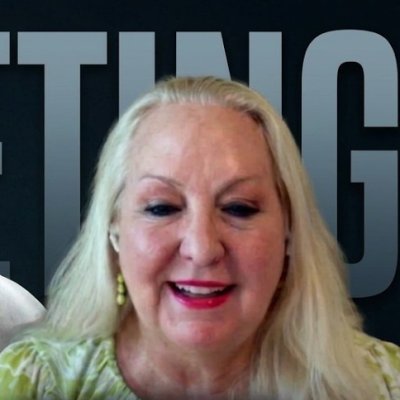
Full transcript of the conversation, published verbatim. Speaker labels come from the recording itself, not from an automated guess.
0:00 · – Introduction: Meet Ginger Peterson
Jordan:0:02
Welcome back to the [High Ticket AI Systems] Podcast. Everyone, please welcome the one and only Mrs. Ginger Peterson. Ginger, how you doing today?
Ginger G. Peterson:0:09
Jordan, doing great. Thank you for asking me to be on your podcast.
Jordan:0:13
happy to have you. With that being said, first question we always ask is basically, what do you do and who do you sell to?
0:21 · – 30 Years in Business: How PCF International survived everything
Ginger G. Peterson:0:21
I run PCF International, Integrated Marketing and Technology. Our clients just call us PCF and we celebrated 30 years in business. We're a full service marketing ad agency company and we're doing great.
Jordan:0:39
30 years, you should be really, really proud of you and the company. That is awesome.
Ginger G. Peterson:0:43
Thank you. Yeah, it's been a lot when I think back of everything we've been through. It's like kind of astonishing. But we're here and we've rolled through the punches.
Jordan:0:53
You know?
Yeah, mean, freaking 08, that was crazy. COVID, that just happened. I'm sure you've seen a lot more, but we might dive into that later. But were you gonna say something? Sorry.
1:07 · – What COVID taught her about staying ahead in marketing
Ginger G. Peterson:1:07
Yeah, no, COVID definitely was a shocker. You know, we've never gone through a pandemic our whole lives. And yeah, it brought many, many, many challenges. So, you know, you have to stay limber on your feet and implement new strategies and techniques or, you know, we would have lost a lot of clients. So you have to think ahead of the game, always 10 steps ahead in marketing.
Jordan:1:19
No for sh-
Jordan:1:34
Absolutely. Speaking of staying 10 steps ahead, did a bit of research, know, born and raised in Honolulu, which is in Hawaii for those that don't know, because we have global listeners. Anyways, so born and raised in Hawaii, and then you decided to, you know, pick up shop and go to Florida. How come?
1:53 · – Why she left Hawaii for Florida (and what "a bigger fish pond" really means)
Ginger G. Peterson:1:53
Yeah, let me correct you. I wasn't born in Hawaii, but I spent my entire adult life in Hawaii. And so I ended up relocating to Florida about 10 years ago, just because I was ready to tackle some new environments, a little bigger fish pond. than in the Hawaiian Islands, but have many, many clients in the Hawaiian Islands of love, Hawaii dearly, and the people are the most amazing people on earth. And I go there all the time for work, and so I feel fortunate that I still get to travel there for business.
Jordan:2:38
You have a third location, correct?
2:40 · – How a fully virtual agency works across the globe
Ginger G. Peterson:2:40
Yeah, we have actually two locations in Florida, one in South Florida, in Fort Lauderdale and one in West Florida in Sarasota. And we're actually a virtual company that's always been our concept for 30 years. So we have a very solid international team that works all over the globe. And we've been able to attract a team that's been with me most of the people for 10 plus years just because of our concept. It's very flexible. People like it. And as a result, I get the best of the best.
Jordan:3:18
That's amazing. Do you have a specific vertical you like to work with or does the clientele kind of vary?
3:25 · – The fastest growing division in marketing right now
Ginger G. Peterson:3:25
you know, it really varies depending on the category of clients. you know, we handle some banks and financial institutions. Those are a lot more structured with the needs that they have. We handle a bunch of shopping center accounts and those are more dictated by annual budgets of what we recommend with marketing plans. And then we have other clients where You know, they only want specific services. I will say our fastest growing division is interactive marketing. And a lot of people go, what's interactive marketing? It's comprised of social media and we do paid social media and digital ads, paid digital ads. It's SEO, search engine optimization. And now we infuse it with AI.
And then AI, we're doing a lot of chat bots and that type of thing. And then email marketing. And so all of those things, and of course your website and your website maintenance. So all of those are kind of under the interactive umbrella. And that's basically what most clients these days require. Cause it's a lot more cost efficient to do interactive marketing than it is traditional marketing.
Jordan:4:40
Gotcha.
Ginger G. Peterson:4:52
However, there are still clients that need some traditional marketing. It just depends the category of business that they're in.
Jordan:5:03
You know, this might be a stupid question, but what is traditional marketing?
5:08 · – Traditional vs. interactive marketing: What actually still works
Ginger G. Peterson:5:08
Traditional marketing would be going to trade shows. It would be having print ads. It would be media buying for television and that type of thing. I would say, you know, a more modern marketing approach would be with the interactive and then, you know, more doing YouTube type of videos, TikTok, that type of thing.
I think traditional, it still has its place. There's still clients that they require media buying on television, on radio, on print. They also require, you know, in-house type of promotions, direct mail, for example, still works great, like with insurance companies and a lot of different businesses. So it really depends. You have to do your research.
And you have to really study their competitors to find out what their competitors are doing. And then you have to come up with the most cost effective way to strategically meet what their goals are as a client.
Jordan:6:17
Yeah, I had a guest on and he did marketing for casinos and he was saying that direct mail direct mail is like the number one channel to drive traffic. And I'm like, direct mail. That's so interesting. Then I thought about it. I'm like, you know who always has promotion mail is my freaking dad. They're trying to get that baby come back to Vegas and cruise lines all the freaking time. So it works because his ass is always in Vegas and always on a cruise line.
Ginger G. Peterson:6:28
Yeah, I know.
6:39 · – Why direct mail isn't dead (and who it works best for)
Ginger G. Peterson:6:39
Right?
Yeah, yeah. And I mean, not to date ourselves or anything, but I would say, you know, and I don't want to pigeonhole it, but I would say an older clientele, they're going to respond a lot better to direct mail. It's a much more conservative approach. And also I'll say a lot of people, they're just completely bombarded with email marketing and they can barely even get the real emails without sifting through a hundred, you know. of all these people trying to sell them stuff and all kinds of stuff. So I think a lot of people sometimes with direct mail, they just find it easier. They can look at the flyer and if it's appealing to them, then they'll purchase.
Jordan:7:26
Absolutely. And I was looking at your website. It looks like you guys help hotels, shopping centers, and then do have a third one? can't remember. But do you have a third one, like a third major?
Ginger G. Peterson:7:36
Yeah, financial. You know, we work in the financial arena as well with banks and mortgage companies and private investors, that type of thing.
Jordan:7:49
Why does one market that the financial side of things?
7:53 · – Marketing for banks and financial companies: What they want vs. what they need
Ginger G. Peterson:7:53
It's all different. Some of the private financial, they like direct mail. Funny what we were just talking about, they find that that's the most effective. And some like email marketing. And then, you know, I would say a lot of them really like the digital marketing. you know, love it or hate it. Social media is here to stay. And I would say they're always a little opposed to social media.
But then we try to tell them that you really need that to be able to reach a much larger clientele with your branding and your message. And so we encourage that. And just so you know, and this is elementary for a lot of people, but what's the difference between organic social media and paid social media? Organic is you grow it very slowly. And paid social media is your boosting it with a meta ad spend on Facebook, Instagram, or with Google. And you just propel the growth much more rapidly. So we try to focus on that with our clients that do social media just because they're going to get better results.
Jordan:9:06
Yeah, I definitely don't want to disrespect anyone out there that's just making organic posts, but like you're almost wasting your time. Like if you really want to fricking see results, put some add put some ad dollars behind that post and see what the freak happens, you know? And I'm glad you do. I'm glad you do. Now, when it comes to
Ginger G. Peterson:9:20
Yeah, completely agree Jordan. Yeah.
9:28 · – Real talk: How Ginger would market a hotel from scratch
Jordan:9:28
I'm just so interested in all the different ways you can market for like banks or like shopping centers or freaking even hotels because like that is not my world at all. Like I know what I know and I think I know a lot, but it's only what I know. You know what I mean? So can you please elaborate? Like let's pretend I own a hotel. Okay. I own a hotel. I'm in Salt Lake City, Utah. I want more business. How would you help?
Ginger G. Peterson:9:37
No.
Ginger G. Peterson:9:41
Yep. Yep.
Ginger G. Peterson:9:50
Yeah. Well, digital ads is going to be the most effective. mean, we always look at does the hotel have a strategic marketing plan because our goal as marketers is to make sure that we have an annual marketing budget from them. And then we create a plan that we think is going to work the best. And nine times out of 10, when we look at a hotel marketing plan, we see a lot of waste, a lot of budgets that they're spending in areas that aren't gonna amount to a whole beans. So that's really, well, yes, a lot of them will be spending money towards marketing and partnerships. And when we look at the partnerships, they have not come in in two years and they're still spending money on partnerships. And sometimes the trade shows can be.
Jordan:10:25
Can you give me a second? Sorry.
10:45 · – The marketing waste most hotels don't even know they have
Ginger G. Peterson:10:45
you know, really huge outlay of capital to get everything ready. And then, you know, I'll ask them, how many new clients did you bring in as a result? And the results just aren't there. So we see a lot of that. And then also some old fashioned, you know, thinking sometimes with hotels that they have to print all this collateral. and have brushers and that type of thing. So we really try to modernize hotels with, you know, the brushers and all the collateral goes online so a customer can download it and it really saves on printing costs. And then just, you know, really targeting who is their clientele and following up on, you know, where is that clientele coming from and building that number one primary base first. and then moving to secondary targets and building the secondary targets. And with the strategic marketing plan, by the end of the year, we have three primary markets that we've already built up, whereas without PCF, they were only focused on all over the place, just kind of scattered. So we try to hone them in to where you can really see results and everything that we do, you can track. And that's...
That's a huge result. see a lot of hotels, don't track the marketing that they're spending. know, they're not really understanding their ROI of where the marketing is successful, where it's not. And one of the things we always ask a hotel owner is, you know, where, where's the number one of your bookings coming from? Is, is it referrals? Is it which marketing? Is it traditional? Is it digital?
Is it from sponsorships? Is it from trade shows? And so, you know, once you start getting answers and then you look at their strongest three competitors and you see what they're doing and what the actual hotel is not doing, you can put a plan into place that's quite successful, that works very well.
12:55 · – Why knowing your customer beats every marketing tactic
Jordan:12:55
I like what you said about breaking up the audience into buckets, right? And I think from a marketer's perspective, that's where we have to start. Who is the ICP? Who is our customer? And if we know our customer inside and out, what they do on the weekends, what they do in the evenings, what their main recover is, you know, obviously a little stream, but I think you know what I mean. It becomes a little, a little easier to actually go out and get those customers because you know exactly who they are, where they spend their time, et cetera.
Ginger G. Peterson:12:58
Yeah.
Jordan:13:23
getting back to the previous guests and how you also market for hotels, direct to mail. If it's an older crowd, know, use go go with where they are going to convert. If it's a younger crowd, you them with a Facebook ad and with an Instagram ad or a friggin TikTok ad, because that's where they are, you know.
13:41 · – The review mistake that's silently killing businesses
Ginger G. Peterson:13:41
Yeah, and one thing I'll point out that can really bring the hotel business down. And I think a lot of hotels, need to pay greater attention to it is, you know, people with reviews and you got to get the reviews on Google, particularly TripAdvisor, you know, Yelp, because people really look at reviews nowadays. So if you have bad reviews, you have to have someone tasked with following up. because basically people that write reviews, they just wouldn't be heard if they're voicing a complaint. And we notice sometimes a lot of the owners, they'll respond emotionally and that's not good. You should just respond factually and politely and then offer your direct contact where they can contact you personally. And then at that time, you have enough time to gather the research of what happened, why this customer was upset.
And then you can say, but truly if the hotel or whatever client did mess up, then you can offer them, Hey, I'd like to have you come in for a free lunch or something like that, because that'll create a peaceful type of coexistent. And, know, people see that they look at how an owner responds. And I always encourage an owner to respond with giving your direct contact because you don't want others to see you're giving a free lunch or. free dinner because then you'll have all these people that believe it or not out there they do focus on trying to get free things and that can backfire on you so yeah
Jordan:15:16
Yes, 100%. I love how you bring up reviews and not having emotional intelligence, but just letting the emotional frustration wear off. That is something I had to learn when communicating with clients and colleagues. I suck at it still with my family. I'll be the first to admit, but family and business are different, okay? Okay. And when it comes to reviews,
Ginger G. Peterson:15:38
Yeah, yes they are.
15:45 · – Why a 1-star review is so much easier to get than a 5-star
Jordan:15:45
from my experience, you have to do something like 10 times above average to get a five star review. You only have to mess up just a little bit, just a little bit to get a fricking one star review. And that, that pillar, that, that discrepancy, but that like difference is massive to get a five star review or a, a one star review. Like you only have to pass up a little bit versus Excel 10X. If you know what I'm saying.
Ginger G. Peterson:16:08
Yeah. Yes. Yes. And reviews are the name of the game. And I think a lot of people find it really annoying because like, you know, nowadays you have people, they'll give you one service and they send you a Google review. And what I do now is I'm like, well, if your service is great for inconsistent for the next month, I'll give you a great Google review, but I no longer give Google reviews right off the bat. you know, personally, because sometimes when I do, then the service goes downhill. So I think, you know, when you give a Google review, you have to really, you know, mean it. You can't just write it. But it is very important to do these days. It, you know, sometimes can put a company out of business with a bunch of bad reviews.
Jordan:16:58
Not sometimes, it definitely will happen. Let's see if we can shift gears. How do you typically find clients?
Ginger G. Peterson:17:00
Yeah.
17:06 · – How PCF finds new clients after 30 years
Ginger G. Peterson:17:06
Well, that's really interesting question, Jordan. It's the most challenging thing, you know, as an owner that I find is bringing in new clients. We're very fortunate because we've been around for a long time. So word of mouth and referral gets around, you know, that we do a good job. We also have an in-house marketing program where we do two bimonthly e-blasts with our own database lists that we continuously grow our database list in the areas where we wanna grow. And I do wanna stress that with the email marketing, you always have to come out with fresh, creative, fresh concepts that are gonna excite people, because you don't want them to all unsubscribe you. And then we cross promote those on our social media, know, Facebook, Instagram, Google.
And then, you know, we keep up with our website at all times. And then we also participate in a lot of different publicity, like this podcast. You know, I do, you're a better known podcast, but I've had a lot of podcast people come at us that, you know, are like, hey, we're just doing this. And I will participate because I believe in giving back and trying to help other businesses. you know, succeed with advice and hopefully input. Most recently, I have hired a LeadGen guy to help with sales. I will say LeadGen people by and large, you have to be really careful. They talk really big, they want retainers, and every time I pay a retainer, it seems like you don't get any work out of them. So you really have to go through, I think, quite a few LeadGen people.
Jordan:18:54
Mm.
19:00 · – The lead gen shift that changed everything: Go nationwide or stay stuck
Ginger G. Peterson:19:00
to finally get somebody good. And we thankfully finally have someone that's good and he brings in leads. And I think, you one of the pieces of advice with the Legion is we were only focused kind of on growing Florida, for example, which is a huge state. And that was a big mistake. And this Legion guy told us no way, go nationwide. And the minute we went nationwide, it changed everything. because it's just, you know, it's funny, you know, if you go nationwide, you just tend to reach different businesses and people. And then we really target, you know, the companies and industries that we really want to bring in. So we don't waste our time. And then it does help to have, you know, some sort of pricing package for that industry, say if they want to go with interactive marketing, giving them a kind of price package. So
Jordan:19:43
Gotcha.
Ginger G. Peterson:19:56
they can see can they afford that or not. And that doesn't waste your time. You can put the price package out. And if they don't have the budget for that, then you probably don't want to be working with them, you know, because we have basic price packages elevated and then a step up. And if they can't afford the basic package, you probably want to pass.
Jordan:20:19
Yes, I will completely agree. I want to circle back to pricing and dealing with clients that pay less money, but out of curiosity, what does the Li Zheng guy currently do and is it a performance model with him?
20:32 · – Inside the cold outreach strategy that actually converts
Ginger G. Peterson:20:32
Yeah, it is. It's just old fashioned marketing. He has database lists. He creates emails with the PCF, International Title Line, a bunch of different domains. He sets up and then he has a bunch of different database lists. And I give him the categories I want him to target. I craft the messages. And then he just does like an attack. dog, you know, he goes after him, he follows up like 10 times each until the person's like, stop, you know, okay, I'll talk to you. And then it's usually a free catch that will provide something free, like we'll provide a free overview of their website and what we think they're missing. And that has really worked quite well for us because with almost all the websites, can see all the social media and the different things that they're not doing well. And so then, you know, it takes time on my part to send, you know, the proposal of here's some opportunities that I think we can put together. And, you know, and then I send a price list and if they want to go from there, they can.
Jordan:21:46
No, I love it. sounds like it does a bit of cold emailing.
Ginger G. Peterson:21:49
Yeah, he does. And he also does calls too. So I feel really, really lucky with him. I will say there was a tremendous amount of lead gen people out there. get hit on at least 10, 20 a week. And you just have to be so careful because so many of them, they just want to take your money and run. And so you really have to interview them. have to get... references and I get three references. I follow up with people he's worked with to really see if he's real because a lot of them come from foreign countries and nothing against foreign countries but you just have to be careful if you're spending money with people. So I like the fact that this guy is US based because I'm going after US based clients. Now if I was going after clients in Korea, for example, I would want a Korean counterpart because that's going to be more effective.
22:48 · – The truth about cheap clients (and why they cost you more)
Jordan:22:48
100 % and circling back to pricing, maybe you could articulate this better than I, but simply put the less you pay, the less you pay attention, the more you pay, the more you pay attention. And what I mean by that is, is if like the ticket size is really, really low, you're not really good at paying attention to kind of what's going on behind the scenes. And from a business honest perspective, there's just a lot more headaches with lower ticket client.
Ginger G. Peterson:23:16
Yeah, yeah, Jordan, you said that right. And we, we have discovered and I'm sorry to say that the clients that are the cheapest, you know, they're just a real headache. And, you know, we now have set kind of like a budget limitation of clients, you know, that we want to work with and if they can't spend X amount, then it's probably not going to work out.
Jordan:23:19
Hahaha!
23:41 · – Plans for the next 12–18 months: Growth, team, and structure
Jordan:23:41
Absolutely. agree. Let's see, shifting gears here, looking over the next 12 to 18 months, do you have like a massive goal, like a goal that you guys are looking to achieve or something in the pipeline that's going to bring some novelty to the business? Yeah, yeah, talk to us.
Ginger G. Peterson:23:55
Yeah, I promoted one of my account coordinators to account manager today because she's doing such a great job. And my admin assistant that's helping me with sales, she's doing such a phenomenal job. I'm going to be promoting her soon and also training her to handle some of the new accounts. So I really believe in.
Jordan:24:02
Hey.
Ginger G. Peterson:24:20
You know, as a goal of running PC up, I've always felt this way. Like if you don't give the people that work with you a chance to move up and handle more responsibility, you're never going to succeed. And that's why I have a lot of people that stay with PC up because, you know, we give them opportunities that they wouldn't get at other companies. would say.
You know, with new budgets for 2027, we start working on those in July, if you can believe it. And we have found that pre-planning, working way ahead of the game with a lot of the clients is the way to go. Because when you work last minute, you tax the whole ad agency structure and then everything's a rush job. And when rush jobs happen, the company loses money. You know, so.
You really want to have a structure in place. Like we use Asana. It's a program where we log every single job into client categories. And that has really been a game changer for us with our team. And we also have a once a week mandatory call, Google Meet call with our whole team. And I can really say, we go through all the jobs. OK, where's this? Where's that? how's it going with this? And I have found if you don't have that once a week call that, you know, things don't go quite as well, because I think, you know, people are people. And if you don't have someone cracking the whip, then, you know, it's not going to go as well. But I would say just working ahead of deadline and then, you know, with new clients that are going to be coming on board with our new sales pitch, just making sure that we have a team in place to handle it because you don't want to have all this new business come on and then you're not servicing your existing clients. So, you know, with growth comes added structure and you want to have that in place. So I can't say enough about structure. Structure is very important.
Jordan:26:25
No, absolutely. I want to say a few things. One, from my perspective, it depends on the type of person that is employed. If they have any ambition to move up within the company. I obviously being a business owner have a ton of ambition, right? I want everything in EDSA. My younger brother, That that fricking guy is so content making his salary and doing nothing else but like making a sad and like God bless him. You know what I mean? But we need people like that with this organization because if you bring on too many ambitious folks, depending on the role in like what the frick the day to day is. Okay. If you bring on too many ambitious people, you're going to have people say, like I want more responsibility way too soon. Or I want to be in your position and they don't really deserve.
Ginger G. Peterson:26:56
Yes.
Jordan:27:13
and it can cause like headaches within the organization. So you definitely need both, but nonetheless, I'm happy you have that structure in place where people can move up because me, I would definitely wanna move up. Second thing, I think you have, not I think, you need to have your thumb on the pulse of your company. that weekly meeting of, okay, here are the potential projects we have, like from a client acquisition standpoint.
Here are the actual projects we have. Where are we with one through seven as an example, right? And like you said, if you don't do that, and if you're not communicating with your team effectively, people, they're people and they're gonna, she hasn't talked to me in a few days, weeks, I'm just gonna hang back, you know? But no, can't go.
27:57 · – Why timely communication is the real reason clients stay or leave
Ginger G. Peterson:27:57
Well, and a couple other things Jordan, I have to add to that that are so super, super important is communicating with your clients. Timely communication is everything because we've seen a real shift over really the last five years where everybody's so impatient. They want everything instantly. And I think, you know, so much of that has changed with the whole digital world and Clients, in the old days, we give you more realistic deadlines. And nowadays, it's like clients just want everything instantly. And so we always train our team, you've got to respond back. You have to be there. timely communication is going to make a client feel good about working with PCF. And one other thing that I see a lot of companies don't do a good job at that is so critical is you have to have a good billing. person, you have got to get your billing out like clockwork. You know, with us, we send it five days before the end of the month for the new month. And you know, you want to make sure the client's paying within 30 days. And with new clients, you know, we do 50%. They have to pay upfront and then they have to pay the balance, you know. And the other thing I will say is a lot of clients, sometimes when they're comfortable with you, they'll give you add-ons that aren't in the budget. hey, can you just do this little tiny job for us? And then they expect you to kind of give it for free. And I don't mind doing some freebies, but freebies can add up to a big loss in the company. So you really have to rein that in very cordially and talk with a client if there's like a lot of freebies that you've been doing and then.
You know, when you're talking with them, you have to say, you know, I'm going to have to increase your budget a little bit because I'm noticing you're needing a lot more work. And, you know, this is what it's going to cost. So, you know, I just want to say timely invoicing and then having an invoicing system. We use QuickBooks with Intuit where clients, can pay online, they can pay Zelle, they can pay ACH, they can pay by check, however they want.
29:12 · – The billing system that protects your cash flow
Ginger G. Peterson:30:17
credit card, it's super flexible and you want to give clients a flexible option of how to pay their bills.
Jordan:30:25
Absolutely. That is so vitally important. Accounts receivable, right? I definitely struggled with that. I didn't know what the proper cadence was when I was first becoming an entrepreneur or whatever. But I feel like I have a pretty solid structure down and sending the invoice a few days early is definitely one of the things that we utilize. I'm not sure if you do this as well, but opposed to every four weeks, it's like every 30 days because of the... If you do that, it's like...
Ginger G. Peterson:30:30
Yes.
Jordan:30:54
4.2 weeks, like if you look calendar year over calendar year, it's like actually 4.2 weeks if you look at, if you look at pain or getting paid every four weeks, I'm butchering this, but I learned that recently and I'm like, that's actually genius.
31:08 · – What to do when a client won't pay (she shut down a website in LA)
Ginger G. Peterson:31:08
Yes. Yeah. And, you know, we do a lot of shopping center promotions and they require a big cash outflow, usually a couple months before a promotion because you have to lock everything in. you you have to make sure you're billing the client for those items because you don't want to outflow all this cash paying all these deposits for vendors. And then the client hasn't paid you. So that's something you have to be cognizant of pre-billing with a lot of the things. And then I will say one other thing on billing. You have to be so careful with new clients in particular, because we have experienced where some have stiffed us over the years when we've gotten all the work done and we trusted them because we're very trusting people and then they don't pay their balance. And so you want to have some things in place where...
You know, like recently we had to shut down a client's website in Los Angeles and we hated having to do that. But you know, he owed us a lot of money and we kept telling him, hey, you gotta pay your bill, you gotta pay your bill. And you know, and I'm sure we can all relate to stories like that.
Jordan:32:22
No, Maybe I have time for a few more questions here. Looking back over your career as an entrepreneur, what do feel like has been the toughest lesson to learn?
32:33 · – The toughest lesson from 30 years of running an agency
Ginger G. Peterson:32:33
I would say dealing with staff and difficult clients that have unrealistic goals and expectations of the ad agency. I think maturity of running a company over the years, you really grow and learn. And one of those learning lessons is being able to stand up to clients where you know, they their expectations are just unrealistic for the budget that they're spending and really telling them, hey, you know, this is what you need to be spending to reach the goals that you're at. And right now you're not spending that. So I would say that. And then also just dealing with staff, you know, keeping people motivated, keeping them on track. And you always as a business owner, you have to keep your eye on the ball. And then also staying ahead of deadlines and just being intuitive. I think an ad agency owner, it's a very difficult position because we're a very deadline oriented business. Margins are slimmer than they used to be and you have to provide actual results. Like you don't want to get on a call with a client and they're like, hey, we've gotten zero business from this. you have to be able to go, no, that's not true. And let me point out some stats of showing you how you have gotten business. So you have to be quick on your toes. So those would be, I think, the things I've learned the most. And we've had a lot of things happen over the years. And just being guarded, too, with accounts, because there's a lot of people out there. They'll try to pick off an account.
So you have to be careful with how you're presenting things, who you're talking to, making sure that you have a trust, trustful relationship with the client.
Jordan:34:35
It sounds to me like what you're articulating is learning how to deal with people has been the biggest lesson. Okay. I'm sorry, Ginger, please forgive me. I turn into a five-year-old kid if I see dinosaurs. The image and artwork behind you, are those freaking flying dinosaurs? What is that? Yes?
Ginger G. Peterson:34:40
Yes, yes, I have turned in very perceptive.
34:53 · – Why staying ahead of AI is no longer optional
Ginger G. Peterson:34:53
Yeah. Yeah. And, and I will say, yeah, I will say one other thing. You have got to stay 10 steps ahead of technology. And that is something we really pride ourselves on. saw AI growing. We established an AI division three years ago and you know, lot of clients are just demystified by AI. They don't get it. They don't understand how it works. And so, you know, it's our job to get them to understand it. because there's now AI search engines, for example, that hundreds of them flooding SEO that as an ad agency, you have to be cognizant of that. You have to recognize that doing, you know, SEO just with Google and Yahoo and some of those, you know, that's not enough. You have to be reaching now different AI search engines to make sure that you're going to get the results. So. staying ahead of technology is critical.
Jordan:35:53
Absolutely. And it's ever moving so fast in today's day and age. What is the single best piece of advice you've ever received?
Ginger G. Peterson:35:57
Yes, yes it is.
36:04 · – The best piece of advice she's ever received
Ginger G. Peterson:36:04
wow, okay, that's a tough one, Jordan. I would say never losing sight of your position and always having one foot in the door with your business and always having rapport and communication with every client in the agency, even if it's. one time a year and you have all these other people in your team working with a client that the client knows that they can pick up the phone and get Ginger Petersen on a call. That is so critical. And another kind of silly thing that I do that it just it's so weird. It means the world to all our clients is we give all our clients a Christmas gift and no one does that anymore. And we
Jordan:36:59
It's hard to do that.
Ginger G. Peterson:37:00
send a thank you with a Christmas gift every year we do that and clients really love that. So I would say just not resting on your laurels and making sure that you're doing the job you're doing. And if you do the job you're supposed to be doing that they're paying for, you're gonna keep your clients. And PCF has kept almost every single one of our clients for 30 years that has joined us. And...
You know, that to me tells me we're doing something right.
Jordan:37:32
Absolutely. retention is everything in ad agency or just marketing in general. Let's see. And then last question here, where can they find you if they wanted to communicate with you directly or hit your website?
Ginger G. Peterson:37:37
No.
37:44 · – Where to find Ginger Peterson
Ginger G. Peterson:37:44
Yeah, www.pcfinternational.com. They can reach me, Ginger8087536999 or 941-294-7666 or email gingeratpcfinternational.com. I'd love to talk to anybody.
Jordan:38:08
I love it.
Thank you so much for joining us, Ginger. You definitely gave interesting perspective on shopping centers, interactive marketing, hotels, and even the financial banking system as well. Thanks again for joining us.
Ginger G. Peterson:38:20
Thank you, Jordan. A pleasure. Bye-bye.