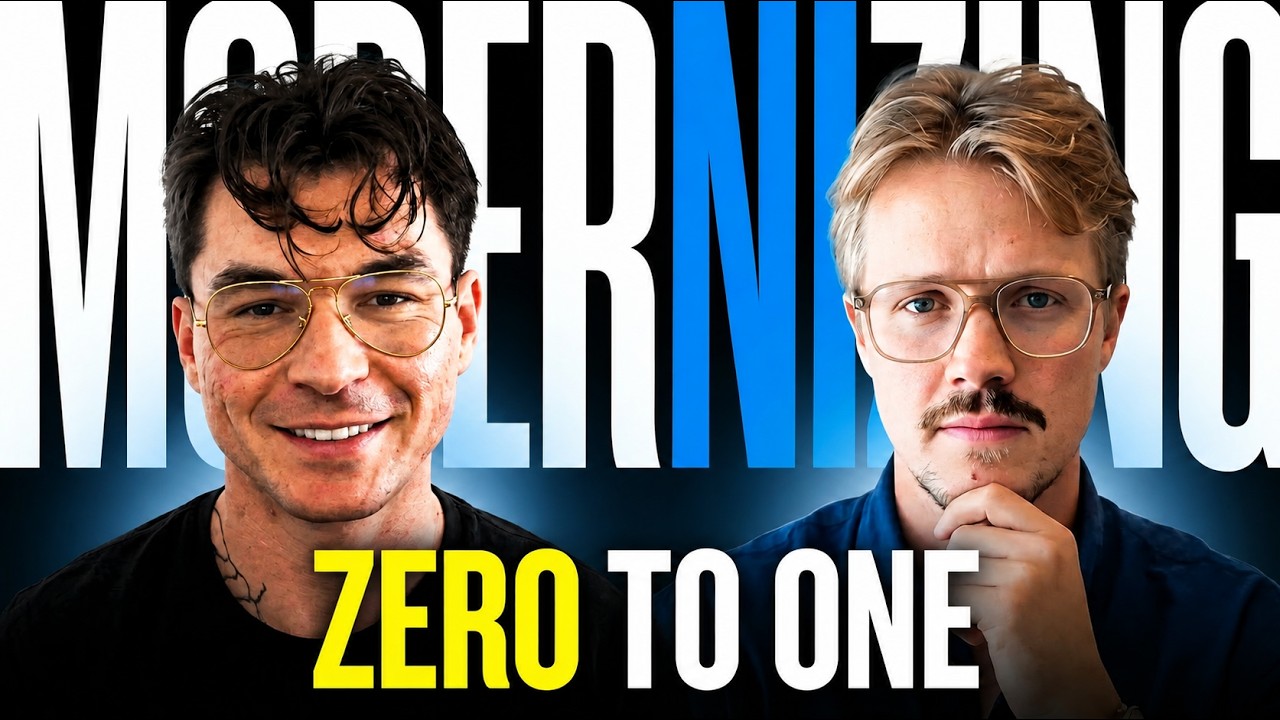
Full transcript of the conversation, published verbatim. Speaker labels come from the recording itself, not from an automated guess.
Jordan Lally:0:00
Welcome back to the High Ticket AI Assistance Podcast. Everyone, please welcome the one and only Mr. Larson Wallace. Larson. Welcome to the show, my friend.
Larsen Wallace:0:09
Thank you so much for having me. I'm excited to be here.
Jordan Lally:0:12
Yes, sir. now for those of us that don't know the name just yet, can you give us an overview of exactly like what the company does and who you guys serve best?
Larsen Wallace:0:20
Yeah. I'll start with my intro real quick. So my name's Larson Wallace. I'm the the co-founder and managing partner at Ally Partners. and we are a technology consulting and and software engineering firm focused on delivering AI driven solutions to to small and mid market manufacturers. So that's the very broad stroke. but we can we can dig in wherever you'd like.
Jordan Lally:0:46
Yeah, yeah, let's dig in. Cause I know AI solutions and no not to be negative at all, super broad term, right? You mind give us like one or two specific examples so we can digest that?
Larsen Wallace:0:52
Yeah.
Larsen Wallace:0:57
Yeah, so maybe I'll first start with how how we structured the company and how we built it, because I think it's it it gives good insight into how we approach work. so when we set out, our our Andrew and I's primary goal, we have three co-founders, it's myself, Andrew Head and Daniel Lund. but Andrew and I set out initially and we knew that in order to
Jordan Lally:1:07
Absolutely.
Larsen Wallace:1:21
To really stay ahead of this race. Obviously, the AI agency marketplace is quite populated nowadays. We knew that we needed to have a very strong technol technology background and foundation. So we were able to bring in a director of engineering from a publicly traded tech company, who's our acting CTO, another co-founder. And then every engineering hire that we brought on since then is that same degree caliber.
And and that that's our technology arm. We have our consulting arm as well, which is made up of myself and Andrew. Andrew comes from Ernst <unk> Young as a technology manager. He was there for about eight years. And really, we wanted to create a one-stop shop to help mid-market manufacturers to transform their business at a much higher degree of speed, quality, and and at a reasonable cost. Right. So what we actually do is we we get into these companies, we Get boots on the ground. We understand exactly how they're they work. We understand the common pain points, opportunities that we have. there's some fractional CTO support, but basically we we create a technology roadmap and help them execute on that, build the customized software, tools, platforms, whatever it may be to help them achieve their long-term strategy and short-term goals. now that that's still dodging the question a bit, what the heck do we actually do? You know? so in the man manufacturing space, I think we focus on kind of a few key areas. first and foremost is downtime. So it's a it's a critical issue across manufacturers. If your machine goes down, then it's very expensive. so that's the the first problem that we solve. We built a pretty robust tool that gathers all machine context, connects the the data streams from that that tool and or machine, and then actually predicts events and provides recommended steps on how to resolve any issues that that come up. So that's number one. Number two is another common pain point in in the industry is employee turnover and retirement. So there's a lot of long-tenured employees that have a wealth of information that they're leaving with. So how do we democratize that information and help de-risk and reduce the timeline to onboard?
Larsen Wallace:3:47
Folks. so that's the second piece. And the third is that is the largest piece. a lot of these small and mid-market manufacturers don't have the level of analytics and visibility into their production floor that a lot of the enterprise groups do. So we take them from zero to one. We don't take them from zero to to agents and and automation. We build the data pipelines, we clean their information so that we can basically layer in AI and very high quality way that presents the right data, the right information to the right person at the right time. So that was a ton. I apologize. I could talk about it for days.
Jordan Lally:4:27
No, no, no, please don't ever apologize. We asked you a question and you elaborated significantly, which is what we in the audience want. So thanks for all the context. if you don't mind me asking, what was the the background before this for you specifically? And what was the mindset that you had when you made the pivot into manufacturing companies specifically? Cause that is super niche. Like I I we don't really have a lot of people on the show that work in that industry. So I'm dying to know.
Larsen Wallace:4:35
Absolutely.
Larsen Wallace:4:54
Yeah. so I have a very interesting background. I I I am a extremely curious mind and I've bounced around quite a bit. So when I initially graduated college, I worked in commercial real estate in the greater New York area, specifically New Jersey. I was a a leasing manager. I I managed 2400 apartments. That was all workforce housing. learned a lot of lessons there. COVID hit, I fled.
Went back to my home state of Colorado and actually got in with a textile startup. So they they created custom chemistries like durable water repellents, antimicrobials, whatever it may be, and then mixed those and sent them to to manufacturers so they could implement them into their products. And I was the lab manager. So I helped with chemistry composition, I helped with Just making sure our lab techs had their schedule for the day. It was a form of project management, but was doing a lot of RD. didn't have a chemistry background, read about 15 textbooks over the course of that year, and had a lot of fun doing it. But I knew that I wanted to make my way into technology. So there's a company called Ibata based out of Denver. they are essentially a rewards platform.
They deliver cash back to consumers. They had a base of about 50 million users. and I came on as a project manager. So I was super lucky in that I came in as a on a as a project manager right when they had made a section of the business that was B2B. We basically white labeled our rewards to retailers, and I stepped into an implementation manager role and onboarded everyone from DoorDash, Instacart, Family Dollar, Dollar General. and got some really great exposure to to what a B2B facing implementation plan looks like, feels like, and and and how you optimize it basically. So that was great. so coming to to ally partners, I met Andrew and Charleston. We were fast friends, aligned on all walks of life, values, goals. we wanted to both break out and start our own business, exit the corporate world, which is always scary.
Jordan Lally:7:20
Ha ha ha.
Larsen Wallace:7:20
but when you have a buddy, it's it's a little bit easier. The issue was is we had no idea what the heck we were gonna do. So we got into a room every Saturday, we call it our hacker house. and we brainstormed research industries, we built a couple of consumer facing apps. Obviously, the consumer facing world is a lot different. Don't think we had the go to market and and funding to to really pursue those, but we looked at each other and we were like, hey.
Jordan Lally:7:23
Yeah.
Larsen Wallace:7:50
There is a ton of opportunity with our combined experience to to go and and consult, but we need a technology arm to build. So we we figured that out. we got our first client shortly afterward. we signed a contract, formalized the business, and set up a bank account so we could accept a check. so we like to say we've been profitable since day one, which is great. yeah, so we S since then, I think when we when we set out, as as you know, you're familiar with with all these opportunities that exist with AI, we started broad market. I mean the solutions are are pretty I mean there's there's opportunity everywhere, right? Across industries. when we signed our second, third, fourth client, it they all happened to be manufacturers. And that was just the nature of our network at the beginning. but as we started to bounce from group to group, we saw the same issues persisting. and with the network that we have and and the manufacturers that we work with, it's a pretty clear funnel for us from a referrals perspective. And we've gotten really good at it. Manufacturers are extremely challenging to not to work with. They're incredible people to work with, but their environments are hard. A lot of them are government contracted.
A lot of them have really strict requirements from a CMMC perspective. So so they don't have the same degree of freedom to implement as a lot of other industries. so we said to ourselves, if we can get really good at this, then we're gonna do just fine. So so that's what we
Jordan Lally:9:34
No, that's awesome then. Thanks for the thanks for the backstory there. Question. Before you had your first client, did you hire the CTO? Okay, so I I thought you got your first client and you're like fuck, dude. I have to like fulfill on the order now. So let me not let me hire the CTO. Okay, but you did
Larsen Wallace:9:42
Yes, we did.
Larsen Wallace:9:48
Yeah. Yeah, we we I it was kind of overlapped a little bit. I think the first conversation we had with the client, we like, We're gonna say yes, but shit, we gotta we gotta find someone who can do this right. 'Cause we had had a couple of of of warm leads. This is this is interesting. I I think every single company that we've worked with has either worked with or been contacted by two or more AI agencies.
Jordan Lally:9:58
Yeah.
Larsen Wallace:10:19
and we've had to clean up those messes on a few different occasions. Because they go from zero to agents and automation, the foundations need to be the there for those things to to work in perpetuity and and last.
Jordan Lally:10:32
With a I I imagine with your AI solutions, it's a fairly large ticket price, like over ten, over fifteen maybe for your solutions, but a lot more. You don't have to give exact if you're not comfortable, but like my guess it's like extremely large ticket.
Larsen Wallace:10:47
Yeah, I mean, yes, they're they're fairly large. in comparison to the groups that we would compare ourselves to from a quality perspective. I'm talking about the Palantirs, the Nvidia's. we can probably extract 80% of the value that those those massive orgs provide at a significant fraction of the price. So I mean, that's how we sell, right? we know what their cost model is. the other thing is speed, but if I were to break down the numbers, it's we bill like a consultancy group. So we run on billable hours. we scope an effort. It could be Forty hours, it could be six hundred hours, it could be a thousand hours, but we bill on the hour. I'd say our our average total contract value for for each customer sits anywhere from a hundred to five hundred K.
Jordan Lally:11:50
Gotcha. Okay, cool. That that makes a lot of sense.
Larsen Wallace:11:51
But with that said, if we scope an effort, we we we may be bleeding hearts to a a negative extent. If we meet with a company that's maybe on the smaller side, under fifty employees, and we see a huge opportunity, we will take a bet on them. So if if they have a if they can't afford a two hundred hour effort and we see that it could change their business, then we're gonna figure out how to do it, basically. And we might need to get out of that at some point, but for the time being, we're building.
Relationships matter mo more than money at the very moment, I guess.
Jordan Lally:12:27
One hundred percent and I think in startup mode you Alex makes this j Hermose makes this joke. It's like whenever you're like in startup mode, like you accept money from anyone who's willing to pay you. Like because you like need
Larsen Wallace:12:38
That's what I that's exactly what I say. I say we're in the market of taking any money we can get, you know. I think that's I think in six months it's gonna I mean we it already looks different, but I think as we drill into manufacturing it's gonna tighten up a little bit.
Jordan Lally:12:45
For sure. And
Jordan Lally:12:57
No, absolutely. And it's a pretty close, tight knit group. I mean, I don't know if there's any networking events or conferences, but I feel like you like you know your other manufacturers, your your comp your competitors, your friends, your buddies, whatever. And if you're doing good work, like they're definitely gonna talk about your business, you know?
Larsen Wallace:13:03
Yeah.
Larsen Wallace:13:09
Yeah.
Larsen Wallace:13:14
Without a doubt. And and that's I mean I I s we're probably gonna end up talking about lead generation and all that at some point, but we're we come we're completely dependent on referrals. So no outbound, no marketing budget really. and it's working. It is a very tight knit community. If we if we deploy for one manufacturer in Lebanon, Ohio, the the odds are that there are five manufacturers within a ten mile radius from them are is very high. So let's work.
Jordan Lally:13:49
Have you well first let me let me ask this and then we can pivot to Legion, but the sales cycle, given the fact that it is a six figure contract, what has what has been your experience between like initial contact and like actually like sign sign deal?
Larsen Wallace:14:05
Six months.
Jordan Lally:14:07
What do you do specifically during that during that six month time frame? Cause y we can extract a lot of value from here. Like is it value based follow up? What would you feel like is the cadence or the frequency that you follow up with super high ticket B to B? And when you are following up, what is the the message, the philosophy behind that? And I'll let you take the floor.
Larsen Wallace:14:31
Yeah, I mean we take it it it depends on on how aligned we are with working with that business.
I I think from a follow up perspective, we Of course, are trying not to badger. If they are in a location that we're running a project in, then we pop into the office. We say, Hey. Yeah, we pop in, we say, Hey, we ask them about what their concerns are. In a lot of the cases, it's just, I mean, I mean, it's budget planning and and figuring out how to make it work. and every once in a while we take we take on a little bit of risk. If we've had
Jordan Lally:14:53
That's just gonna say that. Yeah, yeah, yeah. Go
Larsen Wallace:15:15
If we've had a session or multiple sessions with them ahead of contract send, then then they go silent, we will build it and send it to them.
Jordan Lally:15:26
Mm.
Larsen Wallace:15:28
And I mean we try to be really safe about that because we run on billable hours. So it's it's a constant kind of tug and figuring out how much we're willing to spend up front. But I'll tell you what, they they respond when we send those those demos.
Jordan Lally:15:47
I bet your freaking ass they will. That is probably the in my opinion, the best form of a lead magnet. It's like you wanna buy X product, let me give you X product for free as a sample, just so you can see it. And then if you like it, like you'll you'll pay me. Or like maybe you have a d different philosophy, or like you not half ass build it. That's a horrible way to frame it. Like you build it fifty percent or you build it seventy-five percent or maybe maybe less than that.
Larsen Wallace:15:50
Yeah.
Larsen Wallace:16:02
Yeah.
Jordan Lally:16:15
But just so they can actually see it and it's tangible, it's like this is badass. Because with technology, without like the ability to see the end result, it's like hard to I guess materialize that. And like and put a dollar on that. You know, you know what I'm s you what I'm saying?
Larsen Wallace:16:26
Yeah.
Absolutely. I mean we we wanna I mean our our strategy, like one of the key pillars is the wow factor. And whether they've gone silent or whether it's the first meeting, we wanna put something in front of them because one of our key things is speed, right? Speed and quality. So we wanna s show them what we're capable of. And any every time that we've done it, we've closed. And secondarily, we maintain the same contract that we initially started with. So contract value timeline basically. and we frame that as as the reality. Like this is a POC. It's it's beautiful. It looks great. There's a lot of work to do in the back back end to the point where we can leave it with you and it works in the long run. If we leave, we rarely do. We we typically sign on for for long-term partnerships. But when you have that, you've built 75% of it, you've scoped a four to six week effort.
You start day one with 75%. So now you can give them 150% of what they could have. And that's that's our tactic for what we call our phase zero. It's it's typically a discovery and a quick win effort that we deliver. we we typically price those around 10K. If it's a big opportunity, we'll do it for free. my partners might slap me for saying that. but that's the reality.
Jordan Lally:17:32
Like that.
Larsen Wallace:17:52
But yeah, w we want to over deliver on that phase zero so we can move to the long term partnership. We want to say, Hey, we said six weeks, we did it in three, we had five different features added, and what's next? You know?
Jordan Lally:18:09
No, seriously, when you overdeliver on your promises, it builds so much goodwill. And more more importantly, trust. And now be now that you have significant trust, it's like they're willing to pay more than than previously because you did the job correctly and it was a damn good one. Now I trust you, take more money. You know? And you were saying that there's really three major solutions that you provide to companies. Do you find yourself like starting with one and then upselling and possibly cross selling as trust has been built and they love product
Larsen Wallace:18:43
Yeah, so it it kind of depends. When we initially initially set out, I I guess first and foremost, manufacturers are very from a sector to sector perspective are very different. Every unique manufacturer is is unique in their processes, capabilities, data, what it looks like. so at the beginning, it's always establishing foundations. It's like let's let's understand, let's get in there. We have we are extremely invested in in being on site and in person.
First meeting to the last. So that's our edge. We're going in and we're spending time. I was on the a month ago, I worked on the floor for a week and a half just as an operator. I spent time in each shift understanding the detailed process. Every time we do that, they say we're the first consultants to ever do that for them. But
Jordan Lally:19:33
Wow, I I'm I'm pretty shook about that as well. Well, hats off.
Larsen Wallace:19:37
Yeah. It's I mean, I love that stuff, you know. I want to get in there, get my hands dirty. but when we typically set out is establishing foundations. our initial strategy at the beginning of this venture was what we called the ally flywheel. So we have our consulting arm, we're going out, we're getting real world experience, understanding real world problems within an industry. We develop solutions, retain IP, and we always keep the customization there, but we build product features that essentially reduced increase our margin by reducing the time spent. So we have a we typically end up building what we call intelligence platforms for them. And we have, for example, a downtime assistant that has reduced, usually reduces downtime by by about 20%. We have a lot of that built already. So we're going to show them our modules that are quick wins and they can choose from those. but in reality it varies. Like I I think if we're being contacted by a company that is just curious about AI and want to understand what they can do, our approach is different than a company coming to us and saying, Hey, this is a huge pain point for us. How how do we solve it?
Jordan Lally:20:58
'Cause you don't know what you don't know. Right. You're first dabbling in AI, it's like, I don't even know what the hell I need, like bliss what are all the options out there? Like fill me fill my with info, you know?
Larsen Wallace:21:00
Exactly.
Larsen Wallace:21:07
Yeah.
Yeah, and and our perspective, and this is the reality. This is the reality. Small and mid-market manufacturers, but companies in general in those markets are more interested in technology than ever before in history, I would say. I think the harsh reality, although it's AI that they're really excited about, they need help adopting and implementing tools and technology that has existed for the last 20 years. behind from AI, they're behind generally speaking. So we're focused on I've said it five times already during this conversation, but it's not it's not zero to AI. It's it's zero to one in foundations. And then cause the surface level implementations of implementing LOMs and and agentic systems and might I say agentic systems at large scale are incredibly challenge challenging to to be successful with, I think, until you've developed a foundation. So I think I've lost the question. Maybe I just liked hearing myself too much. Where are we at?
Jordan Lally:22:22
You're good at honesty, bro. I fucking forgot the question too. no. but on that note of agentic AI, maybe you can provide some insight. But you know, I use Claude Code. I'm pretty sure you and I work in two very different worlds. But like what LLMs and like models are you using to perform or to execute these AI solutions?
Larsen Wallace:22:27
Yeah.
Larsen Wallace:22:47
So in internally we're a Claude House, Cloud Cursor. I mean we are we're a small team and we're agile teams, so we are very up to speed on on new options, new opportunities with with in each stack.
Jordan Lally:23:02
Fables Fables coming back tomorrow. Sorry, I had to I had to inject be or like but
Larsen Wallace:23:06
Yeah, I know. They just I was like, that was a quick launch and takeaway. yeah. yeah, so we we'll use those. And from an external perspective, I I think it's very dependent on the client security posture. especially in manufacturing, if they're up against a lot of compliance. we
Jordan Lally:23:13
I was so pissed about it. It's coming back. It's coming back.
Jordan Lally:23:28
Okay.
Larsen Wallace:23:36
I mean for manufacturers we we develop fully on prem, pre-trained open source models. So they're air gapped, they're on premises, and that can vary by use case. Like one of our clients uses it for R and D. So there needs to be robust kind of OCR systems, there needs to be a few math models in there, but it can vary inside Claude House.
Family.
Jordan Lally:24:08
Open source, correct me if I'm wrong, it's You can use other models that aren't the latest for like significantly cheaper. Is that how that works? Or is it am I am I far fetched?
Larsen Wallace:24:21
No, no, that's it. it they're not necessarily cheaper. I guess in the long term you will get return on investment, but we're we're purchasing pretty heavy duty hardware from Nvidia to run these models. but you can you can get a Nvidia DGX Spark, which is basically like a Mac mini, but the thing hums, and you're paying for for power, and that's it.
Jordan Lally:24:52
Gotcha. Yeah, I imagine it's a it's a f excuse my language, a lot of processing power for what you guys are doing. You know, like you said, a gente like scale.
Larsen Wallace:24:59
Yeah.
Yeah, and it's it's funny, it's like I you hear a lot about agent cost in the market right now, especially in enterprises. They're like if if we're not spending if you're not spending at least the equivalent of your salary and tokens, then what are you doing? I think that's wild. You know, it's like if I'm spending 200K on tokens per individual, I better see some pretty crazy stuff.
Jordan Lally:25:19
Ha ha ha ha.
Larsen Wallace:25:31
You know, we better be screaming from a revenue perspective. And it's it's hard to measure, you know.
Jordan Lally:25:39
No, for sure. with Legion, so primarily it is referrals. Is that like a steady not a steady flow, but like could you say month over month that we get like two referrals a month or or one one referral a month?
Larsen Wallace:25:54
It's up and down. because we're early, it's it it can be a slower churn. You w with referrals, I think you you gotta wait for the right time to ask with the clients. You want it to follow a incredible delivery or milestone in the project. so it it's it's a slower churn right now. I I think from the quality of client that we get from it, it's it's super sound. which is great. So We'll we'll see. I I definitely foresee that strategy changing a little bit. We have pretty pretty large goals in the long run. so that strategy will probably adjust.
Jordan Lally:26:45
think referrals are a great great a great way to enroll clients because I believe they enroll at like 80 something percent because trust is already there. For from our experience, if you're in operation scale mode, you you just have to open up more doors. But are do you also partake in like networking events or conferences at all to shake hands?
Larsen Wallace:26:53
Yeah, exactly.
Larsen Wallace:27:09
We've talked about it a lot. you know it's Yeah, I mean that's where that's where I'll stop. It's like every time that we find a conference that seems like it fits, we're we're too busy to go right now. Maybe that's problem. there's there's a conference what's up? Good busy. Good busy. but good busy maybe is bad if if you're neglecting other things just on the client work. So there's always a balance that needs to be needs to be striked.
Jordan Lally:27:27
It's a good busy. Good busy?
Jordan Lally:27:43
Actually, if you don't mind, 'cause you have three co founders, how do you guys divvy up responsibility? The CTO guy is primarily, you know, the technology arm, but with you and Andrew, right, how how does that part work?
Larsen Wallace:27:54
Yeah. we're f we're figuring it out a little bit.
Jordan Lally:28:01
I respect that answer, actually. I respect that.
Larsen Wallace:28:03
Yeah, I I'll I'll be honest. I I think that Andrew and I are both really skilled in our our individual areas. Andrew is an absolute killer when it comes to
Larsen Wallace:28:17
Accounting, finance, long-term financial strategy, all of that stuff. He's great with broad business strategy. but as of now, we are the primary business functions in the company. So all back office operations, handling all hiring, everything like that. but more importantly, we are client-facing. We are we are running the projects and implementations as implementation managers for each of the clients that we work with.
I I'd say that if I were to D V S up, Andrew generally focuses on the broader market opportunities, broad industry. I'm more focused on manufacturing. He's as we grow that base, that will kind of even out between us as we continue to niche down into manufacturing. But we have a I think a very good balance. He's he is a very tactical, hard worker. The kid works like 14 hours every day at the least.
He's one of those guys where you sit next to him and you could be having a conversation with him for an hour and he's just on his computer banging out fifteen other things.
Jordan Lally:29:27
I wish I could multitask like that and like have a conversation. I cannot do that shit. I'm like I'm working or I'm talking. There's no in between.
Larsen Wallace:29:29
No, we can't. Yeah.
Larsen Wallace:29:36
Yeah. and and you know, luckily I I think that some sort of more formal hierarchy could come into play, but we're not seeking venture capital. We're not and we are doing really well. And I think that from we run on the EOS traction strategy. so you can bet on us being extremely aligned on on what we're we're looking for quarter to quarter, month to month, year to year. so so there hasn't been Any issues with how we how we operate.
Jordan Lally:30:10
That's awesome, man. Yeah, I feel like it's really important who you bring on it within the company from a co-founder perspective, from a leadership perspective. Like you said, you and Andrew hit it off pretty well from day one. Fantastic. If you hate your business partner, shit's going south, you know, simply put. And I also feel like if we can if this person has extreme strengths, which are my weaknesses, and I vice versa, have extreme strengths with their weaknesses, I feel like the company can go a lot farther. I was always the type of person to I guess bring on individuals because they had the same skill set as I and we thought very similarly, which is good for a sales and marketing role, but for another role like account manager as an example, you I don't want that person to be like, Just because I'm like not not the best suited for that role. Like obviously, like it it performs well, but I know with other personality types we we can have a a better model with with with a different personality. You see what I'm saying? You just learn through mistakes, but I know we're wrapping up on time here, my friend. Maybe two or three more questions. You know, looking out over the next twelve months, where would you love to see the company? And what what does that look like visually?
Larsen Wallace:31:14
Yeah, exactly.
Yeah.
Larsen Wallace:31:29
yeah, I I think I mean there's two different answers I can give you. I I can give you the answer of what we wrote down on our on our sh one, three, five, ten year plan. I think what what's in there is we've scaled the company to three million in annual revenue, with a headcount of ten to fifteen. That's a very Tactical answer, I guess. If you were to just ask me as a as a friend, I mean, first and foremost, I hope we're we're delivering with the same degree of quality and speed that we are now. We're alive, we're happy, we're we're we're doing good work and we're making money doing it. I mean that's that's that's what we can hope for now. We're young, we're hungry. so we're just gonna keep moving day by day. And as long as we know what what the goalpost is, which we do now, then I I I I think we'll
Jordan Lally:32:26
No doubt in my mind you guys are gonna be you guys are gonna make it. Like wh whatever the hell the goal is, there's no doubt in my mind you guys are gonna get it. Absolutely. No for sure. And then I love to ask this question because you never know what kind of answer we're gonna get. But looking back over your life, what is the single best piece of advice you've ever received? And if you need to, you can take your time.
Larsen Wallace:32:32
I appreciate that, man.
Larsen Wallace:32:50
Don't half ass two things, whole ass one thing.
Jordan Lally:32:53
I haven't heard that before, but I really like that. I really like that one. Hell yeah. Because like you why I was talking to some person about this. It was a girl to be exact, but I was talking I was talking to this person about this, and I was like, if you are not going to attempt to be the best and to give it your best effort, why even try it all? You know?
Larsen Wallace:33:01
Yeah.
Jordan Lally:33:19
Like you're letting yourself down. In that's my belief, of course, but I feel it coincides with w exactly what you just said.
Larsen Wallace:33:25
Yeah, it's it's I think it's really true. and you know what, I I think the things that you dedicate your yourself to frequently bring you the most happiness. I mean it's it's so common to hear, but it's like did you try your hardest? If you did, you'll you're probably looking back smiling in most cases. And boy, if I tell you that's what we're doing right now, we're working our butts off.
But we're having so much fun, you know. If this crashes down in five years, I'm still gonna be as stoked as I am now. I'll probably be a little sad, you know, but I'm not worried about that happening.
Jordan Lally:33:54
Yeah.
Jordan Lally:34:03
Sure, sure, sure. But you can look back and say, Right. Never no negativity. No block all negativity. But yeah, man, like worst case scenario, looking back, you're gonna say, I tried. I gave it my all. What more do you want from me? You know? And I feel like that's where like pride, like like pride comes in, like self confidence, or I don't know, whatever whatever the hell fucking term you want to put in there. But the overall grit, it's like, I did that. I gave it my all. No regret.
Larsen Wallace:34:22
Yeah.
Larsen Wallace:34:27
Yeah, that's one of our values is grit. yeah, I think the the other thing just I mean, I think we all have a lot of pride in what we've built and and a lot of companies preach transparency. that is at our core. With with every group that we work with, we fundamentally care about them and and wish want want them to take the best route possible and and we'll tell them what that is. regardless of of whether or not it's with us or or with someone else. And when you operate like that, life becomes super When you're on the floor of these manufacturers talking with the guys that that are s in some cases freaked out about AI and you get to understand them and and hedge their concerns and all that. I I don't know. I I I could ramble on, but I'm just super proud of of what we're building because it it feels honest, it feels right, and manufacturing matters. So
Jordan Lally:35:28
You can hit your your head can hit the pillow that night and realize you're not fucking nobody over. You're doing a good thing and that's really important. Larson, if they wanted to talk ch talk shop with you furthermore, where can they find you?
Larsen Wallace:35:33
Yeah. We're doing a good thing. Yep.
Larsen Wallace:35:41
Yeah, you can you can find us at allypartners dot com, a L A I partners dot com. you can always catch us on LinkedIn and hopefully hopefully I get to hear from some you.
Jordan Lally:35:54
Absolutely. Thanks for joining us, my man. We'll talk to you soon.
Larsen Wallace:35:57
Absolutely. Thanks, Jordan.