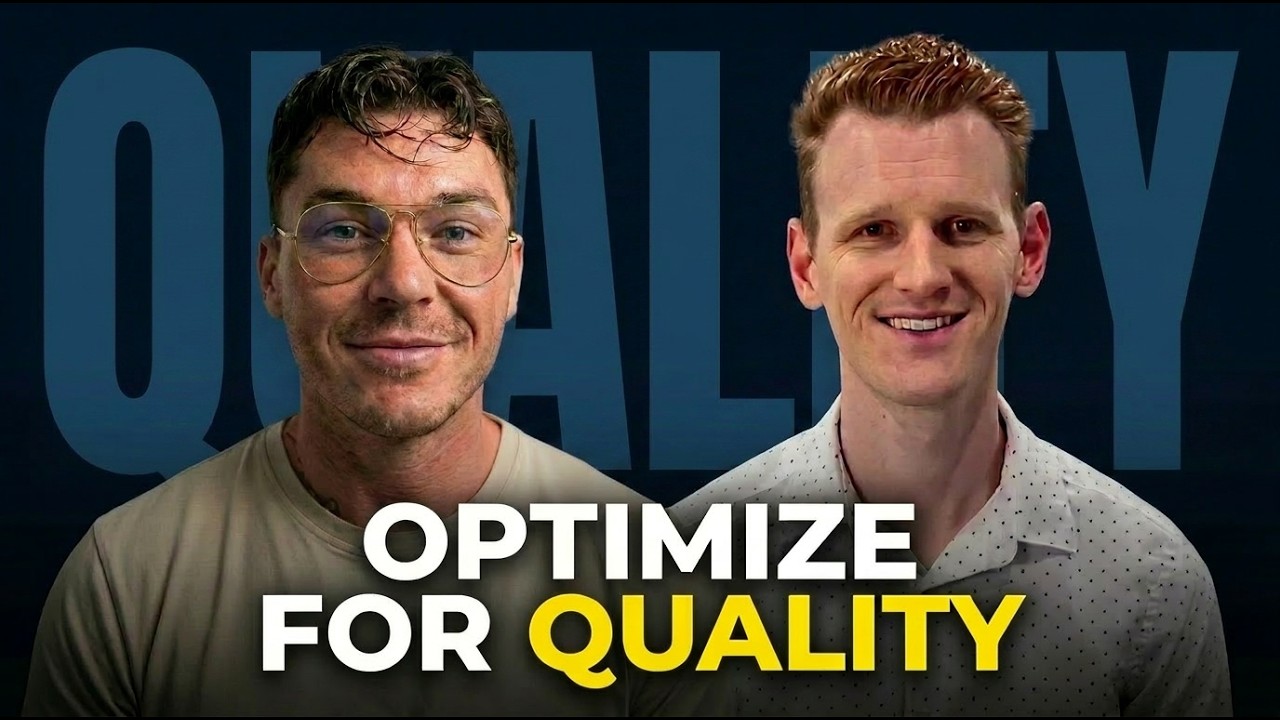
Full transcript of the conversation, published verbatim. Speaker labels come from the recording itself, not from an automated guess.
Jordan Lally:0:00
Welcome back to the High Ticket AI Assistance Podcast. Everyone, please welcome Mr. Kyle Redlich. Kyle, welcome to the show, my friend. How you doing today?
Kyle Rutledge:0:09
Awesome. Thanks for having me, Jordan. Doing great.
Jordan Lally:0:12
Absolutely. Now we were talking off camera and I'll let you do a quick intro, but you actually we have some things in common here. At least some some some mentors in common and again I'll just save it, but I think the audience is gonna be very appreciative of what you what you're gonna say here momentarily. But first and foremost, at a very high level, what would you say the company does and who you guys serve best?
Kyle Rutledge:0:38
Yeah, so we're an ads agency for you know simplicity's sake. We focus specifically on lead generation. And so everything we do is around lead generation. And we've done a lot of work for B2B type businesses and a lot in the financial services spaces as well. And so but broadly speaking, we we it's it's lead generation. A lot of the systems and processes we have. apply to basically any service based businesses that are looking for leads.
Jordan Lally:1:12
And one of the financial services companies that you work with is I'll let you say it.
Kyle Rutledge:1:18
Yeah. They're the they're one of the portfolio companies for Alex Ramosy and acquisition.com. Yeah.
Jordan Lally:1:23
Solid, solid. Yeah, super badass. Maybe we'll get into the nitty-gritty on what you can see from the outside perspective on that, but we may or may not do it. We'll see how the combo goes. So we're working in primarily financial services. I like to niche down because whenever you niche down, like I mean for the sake of the conversation, whenever you niche down, we're allowed to get more specificity and extract more golden nuggets for the audience to consume.
So that being said, what are some of the processes and systems you have from an advertising standpoint, whether it's media buying or on the creator front for financial services that has allowed that has allowed those companies to scale?
Kyle Rutledge:2:15
Yeah. Well, the the core of what we do and and one of the things that makes us different as an agency, it it's really about getting higher quality leads rather than more leads, right? and as you can imagine in in financial services, that's a huge deal, right? If you're getting leads for people that have no budget, no savings, no like nothing, like why are we having this conversation type situation?
Jordan Lally:2:30
Amen.
Kyle Rutledge:2:45
so how that works is you're getting leads from whatever ad platform. Maybe it's Google, maybe it's Meta, maybe it's something else. Most platforms have a click ID, a click identifier. So somebody clicks from a Google ad to your website, they get a Google Ads click ID. Now there's a way of capturing that through a form when there's a phone call that happens. there's lots of mechanisms of how that happens. And then you basically are tagging That lead or that person in a way that you can give that ID back to the ad platform. Let's keep going with Google here as the example. And I can tell Google, hey, this call, it was quality. They have budget, they have a timeline, they have, you know, they they want to take next steps. So in your CRM, you set them as a qualified lead, as an opportunity or whatever that looks like for you and your team.
And you can shoot that ID back over to Google and say, hey, this wasn't just a lead. They didn't just fill out a form. They didn't just call us. They were actually qualified. They're taking next steps. Find us more people like that. And that's, as you can imagine, huge for like, like I said at the top of the show, a lot of businesses, but it's huge for financial services and B2B type high-ticket businesses.
Jordan Lally:4:08
Absolutely. Are you using any third party tool to do that? Cause I know Hyros, if you're familiar with that platform, they can use something similar. There's other ones now that Cloud Code is here. There's other platforms that are kind of taking the reins on that for a significantly lower cost. But yeah, are you using any third party tools?
Kyle Rutledge:4:27
There are a number of them out there. Most of the time I'm doing the setup directly from the client's CRM, straight to the ad platform. HubSpot is a really good one for that. A lot of people use Go High Level as well. They have a pretty good connection. a lot of the other CRMs need some sort of third-party tool. Zapier is what I've traditionally used. And as you've mentioned, that there are a lot of new softwares coming onto the market for that.
Jordan Lally:4:36
Gotcha.
Kyle Rutledge:4:56
Hyros can be a really good one. A lot of people kind of as you hinted at, don't love the price tag of it. And so we've we've always done the the same thing or a very similar thing to what Hyros is doing. They do a little bit more with attribution and reporting there. But the core of what they're doing is the same thing, is is getting these offline conversions as are as they're like as they're named, right? Getting these offline conversions back into the ad platforms.
So you can act actually optimize for quality rather than a volume praying that they're good.
Jordan Lally:5:32
Absolutely. And I know you brought up in the example Google Ads, but I know from a Facebook and meta advertising standpoint, one of my mentors, Jeremy Haynes, I'm not sure if you actually Google him after our first talk, but he essentially, and a lot of gurus would teach this, but open targeting, yes, but it's not using the schedule event. It's not using the lead event. It's actually using a custom conversion and essentially just letting the the your messaging, like the words you're saying, what's in the actual advertisement, the messaging and the the pixel do the targeting for you, right? So whenever you do get a qualified lead that comes through, you can mark them as a marketing qualified lead within the C C R pipeline. That information gets sent back to the platform and it's like, boom, I'm gonna do my best to find more people like that. And again, I think the most important thing is you're not Optimizing for event you're the event you're optimizing for is a custom conversion. It's not schedule or lead like the traditional ones inside meta. Any feedback or thoughts on that?
Kyle Rutledge:6:41
yeah, for sure. There's a there's a system or something that happens with when you're optimizing just for lead volume. I call it the reverse optimization trap. So let me let me dive into this for two seconds to take the caveat. So with the reverse optimization trap, it's like you're telling Meta, Google, whatever platform it is, I want as many leads as possible for as cheap as possible. That's effectively what ninety-nine percent of advertisers are doing.
Jordan Lally:6:51
Ha ha ha.
Yeah, yeah, yeah.
Kyle Rutledge:7:11
Right. What that does is it it teaches the platform like, I want the person that's the easiest to target, the person that's going to fill out the form the easiest. But on the flip side, the person who's actually your buyer is probably a more expensive target, right? They're the C-suite, they're high net worth individuals, they're whatever, whatever makes advertisers want to target them. So naturally they're gonna be the higher, more expensive target. And so When you're telling the platform, I want as many leads as possible for as cheap as possible, the algorithms are getting, they're getting really smart nowadays. Like they're getting good. And so when you're telling them, give me volume, it's gonna go after those people who are willing to convert, willing to fill the forms. But that's probably not that more expensive target that's actually your buyer. Right. And so it's actually starting to optimize against you, against your core objective, which is. to move the needle in terms of business outcomes, you're gonna get more leads that are less qualified, tire kickers, maybe even spots and spam. Like I've seen this happen a number of times with some of these, you know, audience networks and third party networks, where it really figures out like, hey, there's something over here. I can get so many leads from this one source. But then you start digging into it and it's all bots and spam. And it's just the algorithm figured out how to get you more of those conversions that you said you wanted.
When that's not really what you're intending.
Jordan Lally:8:40
Exactly. Meta has so meta knows more about ourselves than frickin' we know about ourselves. So the the the point of this is is out of all the advertisers out there, it has data on when I convert as a lead. Okay? And if meta knows that I tend to fill out a form more often than I fill out a full call funnel booking.
Kyle Rutledge:8:47
Yeah.
Jordan Lally:9:09
And in this example, that advertiser is optimizing for schedule. I don't really I I never book a call. All I do is just fill out a form, and that advertiser is optimizing for lead. The algorithm is now gonna start feeding me more ads where the optimization event or the conversion event is lead because it knows that I take action on on that speci specific event. And with the bots that you're mentioning, because there's so many agentich like.
AI out there that they can literally go on Facebook Market or the Facebook ad library, they can click learn more or apply now, they can fill out the entire freaking form and like go through your entire funnel for you. But it's it's just a yeah, it's even a real person, right? And like you said, if we're optimizing for a lead and meta's job is to give you the most conversions for the cheapest costs, it's gonna get dog shit, dog poop, leads. You know what I mean.
So with that being said, what do you what do you what do you do to combat that and overcome?
Kyle Rutledge:10:15
The the Bots and spam specifically.
Jordan Lally:10:18
Or just optimizing for a higher quality lead in general.
Kyle Rutledge:10:22
Yeah, so this whole process of of configuring the offline conversions, you mentioned it really well, where you're getting those marketing qualified leads, those sales qualified leads, and sending those signals back from your CRM most of the time back into the ad platform as a custom conversion. There are multiple ways of doing this. There's no it's not just a one-size-fits-all solution. But once you have that data pop populating back into the ad account, you need to change your campaign settings.
To your campaign setup and campaign settings to actually start optimizing for those events. Right. So I th there's actually this, what we're walking through here is what I call our lead quality framework, right? Step one is all about the tracking, the setup, the integrations, getting the data piped in. Step two, and I've seen this with a with a client who came to us in January, they had this set up. They had the data coming in.
But they didn't have the account structure and the setup and the campaigns set up in a way that's actually utilizing the data to optimize for what you're wanting to get. So that that's that's part two of the whole equation is you need to have the right campaign structures. You need to have enough volume. Sometimes that's half the battle for some of the small advertisers, is you need like if you have thin data.
Like maybe you get two marketing qualified leads a month. Like that's not enough for any algorithm to learn off of. It might help, but you're not gonna be able to optimize towards just those actions. And so the the second step that we'll take is is really all about getting your campaign and your overall ad account set up in a way that's actually able to use the data and start getting you the the the conversions that you're looking for.
Jordan Lally:12:12
Can you give us some can you give us an example on how that would look? Like optimizing the campaign structure. are you ref referring to like the reporting and how like just the dashboard looks or entirely different?
Kyle Rutledge:12:26
it's it's entirely different. So for example, this this client that came to us in January, they are in the insurance space. They're actually public adjusters. And so they they're they're running Google Ads campaigns and they had the data populating back into their Google Ads platform. but specifically in Google, and this may be changing in the next few months, you know, Google's always tweaking things. But traditionally it's been your campaigns learn from the can the the conversions that happen inside of that campaign. Does that sense? So this client they had, I want to say eight campaigns when they came to us. And with their budget, it's like they're spreading out their budget across these eight campaigns. And so each campaign was only getting You know, a handful of qualified conversions per month. But for Google to optimize, you need 15 campaigns at a minimum. Some people will say 30. So shoot between 15 and 30 conversions that you're trying to optimize towards per month. And again, we're not saying leads anymore. We're saying qualified conversions. And so if we're only getting three to five per campaign, that means you need to consolidate. You need to Aggregate that data in fewer locations. And so a good baseline, you know, at least on the search side, on the Google Ads side, is I'll tell people, if possible, and there's reasons why you wouldn't be able to do to do this, have a brand campaign defending your own branded terms and targeting those, a competitors campaign if you choose to target competitor terms, and then a non-branded, non-compete competitive.
Type of campaign and just have those three because each three of those operate and function very differently from each other, which is why you'd break them out. But if you can have everything in that one non-brand, or you know, 80% of your account in that one non-brand campaign, you're gonna get so much volume of data in there that you'll be able to optimize for that qualified lead, that marketing qualified lead. Maybe you could even start optimizing for sales qualified lead.
Kyle Rutledge:14:49
Or whatever that next stage in your in your sales process looks like. And your quality will just keep going up as you start optimizing that way.
Jordan Lally:14:58
Gotcha. So consolidate campaigns, ensure that each campaign is achieving 15 to 30 conversions. At that point, you can move the conversion quality a step further down in the funnel, if of course if of course budget permits. Would you say from on the on the meta side that there is there's campaign learning, there's ad learning.
Kyle Rutledge:15:15
Correct.
Jordan Lally:15:27
There's ad set learning, there's campaign learning, and then like your entire meta account, your advertising account learning. Like each and it all works cohesively nowadays. When like freaking five even five short years ago was not like that. Would you say a lot has changed with with meta over recent years?
Kyle Rutledge:15:47
Yeah, a lot has changed with Meta, especially with the the Andromeda updates and and everything that's been going on in the last year. Right. And and it's it's also interesting because, you know, Meta says one thing, and then you'll start hearing all of these advertising professionals, but they all will go out and experiment and they'll all say similar things, but it's all kind of different. And so it's r the reason why I use the Google example instead of a meta example is because meta, it's like,
Jordan Lally:15:55
Right. Yeah, yeah.
Kyle Rutledge:16:16
It's really hard to know like what is the exact number of conversions that you need in this time frame and like what's the exact structure that you need? Like we have our thoughts, but I don't wanna give out like hard, like this is the truth, because I know that there's people out there that will have their own reasoning to say something totally different. So
Jordan Lally:16:35
Yeah. I know for Jeremy, he says I've seen it after like one conversion event where like the pixel immediately starts going after that person, right? I think Google is a bit more set in stone. And there's other people like you said that's like all right, it's five conversions a day, blah blah like w whatever the case is, right? do you help financial service companies with the creative aspect or do you give them okay, is it done for you on the creative or do you give them high level strategies and they kinda execute that, but you like run the media for
Kyle Rutledge:17:10
Yeah, so currently it's mostly a done with you service. And we're building into more of a done for you type aspect. But so let me give you the picture of of how we work with clients currently. we do a lot of the strategy piece on the creative side. And so in coordination with the the copy and the messaging, like we do a lot of different tests and and
Jordan Lally:17:14
Interesting.
Jordan Lally:17:19
Okay.
Jordan Lally:17:25
Yeah.
Kyle Rutledge:17:38
figuring out what what's the right value proposition, what's the right pain points people are experiencing. We'll probably get into that later. But we'll want to do a lot of creative testing. So we'll figure out, you know, what are competitors doing? What are what have you done in the past that's worked really well? What are you doing on the organic side that that works really well? what are other people doing in the not even in your industry, but in other industries that are kind of unique and creative that we can model after. We never want to steal ideas from other people, but we can find models of what we can come up with hypothesis hypotheses on and then come up with a strategy on what we want to do moving forward on the creative side. And so we've done a lot of that creative strategy for clients. And we do a lot of we do all of the account management and like in platform management of building the ads and all of that. But most of the time up until this point, we've been Sending the clients a brief basically and say, hey, whoever's been doing all of your design up until this point, we want to keep the design layouts, looks, and feels all the same, right? From the landing page to the ad creative to like we want to we want the funnel to look cohesive. Because even if you give the same designer or two designers the same creative brief or and creative guidelines, each designer has their own creative style.
Jordan Lally:18:56
Yes.
Kyle Rutledge:19:08
And so it can all be within the same and within brand guidelines, but the design style will will come out different. So that's one of the reasons we've done it. We're also a newer agency. So candidly, it's just a service that we're building. And so we've asked clients, hey, here's the strategy. Can you go build this? And that's worked out really well for a lot of our clients because a lot of times they have those designers and don't want to be paying for an additional service if they already have the resources. there are some clients that would like more help on that. And so we're we're looking into different solutions. one of them being the forefront is AI, static design. And we're we're doing a lot more on that front and and learning and experimenting with that, and it's proving to be successful. and so we're looking to add that as part of our services. what we don't have right now is the video aspect. So
Jordan Lally:20:09
Th thanks for being honest and transparent about that. I don't know about you, my friend, but I have been getting tons of ads from AI avatars saying this ad is AI and I look like this and I am not a human being and like look at all the cool stuff that I can do. And I th I'm thinking to myself, I'm like, that is really powerful. I haven't taken I haven't taken the time to like dive in.
Kyle Rutledge:20:13
For sure.
Jordan Lally:20:35
several reasons like I don't own an ad agency and like I don't run ads right now so like I'm good but when the time is right like I think I will definitely like invest a lot a lot of time effort energy into that because I'm like holy smokes man like it's just gonna save everyone time they're they they they can look the part because not everyone probably like me is like camera ready You have to articulate yourself clearly. I'm covered in tattoos. That might be a turnoff to some people. You know what I mean? Like there's just so many factors. but I did see with Claude and with new OpenAI's soul SOL five point six or some, whatever the hell name, that the static ads that you can create just with e com alone. has like fucking shot excuse my language, has like shot to the roof on the like the ability to create really strong, powerful ads. I'm not sure what AI you use right now, but is that kind of where you're going? W where your headspace is at right now?
Kyle Rutledge:21:43
Yeah. there are a lot of different AIs that we're testing out, you know, between the ChatGPT, the standard Chat GPT Gemini Clauds of the World and a lot of other third parties for for image generation as well. but yeah, we've seen we've seen a big shift where it, you know, for years it was like video, video, video, like it performs the best. And now it's like actually I've seen some static ads that have outperformed video.
Jordan Lally:21:53
Yeah, yeah.
Kyle Rutledge:22:12
And so it's like, I mean, from a from an ease of creation standpoint, like why don't we just get some of these static ads built for our clients? If we do them well, they'll perform just as good, if not better, than some videos. And we can figure out the video piece down the road. But at least for now we're we're providing that value.
Jordan Lally:22:34
Are you offering retirement services or like life insurance or not you specifically, but like your clients?
Kyle Rutledge:22:41
Yeah. some of my clients, I I mentioned one of them already, the public adjusters. some are doing life insurance, some are doing wealth management. yeah, and yeah, exactly. I've done I've done reggae private equity, you know, I've I've done viadical settlements, which is the reverse of selling life insurance.
Jordan Lally:22:52
Okay, so just please.
Kyle Rutledge:23:09
The company's actually buying that life insurance policy off of somebody who's going to let it lapse. Right. And so instead of them letting it lap, they're going to buy it off of them and give them 20% face value. But at least they're getting, you know, instead of letting their million dollar policy lapse, they're going to get $200,000. And then that company will hold it for the next 10 years until they expire industry term. And then that company will be able to cash in on the million dollar policy.
Jordan Lally:23:43
Wow, I didn't even know that was a thing. How how do you articulate that message, dude? I feel like that has to be articulated in a in a video. There's no way I'm gonna look at a static ad and be like, yeah, I clearly get that offer. You know what I mean or or or or or maybe some folks do. But to me, I think the more complex the offer the the video, like you just gotta freaking do a video, bro, because there's no way you can explain unless unless I need to get better at simplification. Meaning I take this complex idea like the one that you just explained to me, because again, I had no idea that was a thing. And I can put it in like, I don't know, a ten word, a fifteen word max like static ad that just explains like explains what the offer is, you know? And I think that would convert. But I'm also maybe it's my belief system where I'm also like the more complex the ad, I should explain it in a video. But maybe I'm wrong. I don't know. Thoughts?
Kyle Rutledge:24:39
Yeah, yeah, no, good, good question. I think it's all about meeting where meeting people where they're at in their stages stages of awareness. How familiar are you with the stages of awareness?
Jordan Lally:24:52
man, the way Jeremy Haynes explains it is there's six. Some say there's four. but you can you can explain, you can explain, I follow along.
Kyle Rutledge:25:00
Yeah. so the the standard one that I've heard is five five stages. For for most of these people, they're just at the very beginning stage. They're in the unaware stage, right? They are unaware that they have a problem, unaware that like there's anything that they could do about it, right? So well, I guess they might be problem aware. So like the the first stage is unaware. Like they're unaware that they even have a problem, you know.
Jordan Lally:25:07
Okay.
Jordan Lally:25:30
Flying blind.
Kyle Rutledge:25:30
The example I've I've used of this is like sometimes my wife, she will yawn and her jaw pops. And at one point we were driving sod billboard and it's like, does your jaw pop? Like that's not supposed to happen, you know? And so we were unaware that that was an issue. But then I pointed it out to her. I'm like, look, that's a problem. Like maybe we should look into that type of situation. So these people, they're probably in the second stage.
Which is they're problem aware. They're aware that they have a problem, but they have no idea that there's even a solution out there. It's like I don't I'm I'm living in retirement on a fixed income. I don't want to keep paying these premiums. I know that like if I held on to this, it would be great for my children and for pass on an inheritance or something. But to them, it's like, man, I need to live now. I need cash now. I can't I can't be funding this for my kids when like I need to pay bills today.
Type situation. And so that's stage two. step three, I think where most people combine steps is like in these three to five area. So let me see if I can get them all right. so you're problem aware, then you're solution aware. You're you're aware that there is a solution out there, but you don't know what the solution is.
But you're you're aware that there is a solution. So you might start searching out for something. This is where a platform like Google Ads might start coming into play. Right? They have to have enough motivation to actually start doing that search, but at least they're aware that, hey, there's there's people out there with this problem and they're finding relief in one form or fashion. And then it becomes product aware. You start researching and you become aware of all sorts of different products. There's a lot of different products, maybe different things that can solve the solution in different ways.
And then you become most aware, which is step five, which is like this is the pro this is the product for me, right? And maybe they're just waiting until the right moment to make a buying decision. Or maybe like me with an agency, a lot of people are most aware of how agencies work because they've worked with agencies in the past. Right. And so at each level of these stages of awareness, you're gonna have to figure out.
Kyle Rutledge:27:56
What's the type of messaging that works for these people? In unaware or problem aware, your best message would probably be hey, by the way, did you know? Did you know that like one of the campaigns that they ran a number of years ago for that, for that viadical settlement service? Was you're sitting on a gold mine, a gold mine. like.
Jordan Lally:27:59
Yes.
Kyle Rutledge:28:26
Did you know that you're sitting on a stack of cash or all this value that you can sell? Did you know that you can sell a life insurance policy? Most people have no idea. And so like it's all about awareness at that point and educating people through their journey.
Jordan Lally:28:43
Absolutely. And you want to speak to the problems and or the circumstances that they are currently experiencing. And then you want to essentially tie in your desire, not your mechanism or your solution just yet, but initiate the conversation with their circumstances and their problems, and then explain their desire and what their end goal wants.
And then your unique mechanism is the bridge between their problem and circumstance and your desire. And that is essentially, I guess Cole Gordon breaks it down like an indirect offer or an indirect way that takes masterful copywriting skills. Like you gotta articulate yourself clearly, you have to understand the freaking market so well where you can just easily explain what their problems and circumstances are and what they deeply desire.
Most people, if you own an agency and you are running ads to to land clients, more times than not, you can just be extremely direct and say, here's the offer, here's how it works, book a call, or like hit the button below, whatever. And like people will convert. But like you said, it really just depends on where the market's at, you know? and I imagine that you are giving this advice because it's a done with you program. You're giving this advice to your clients, right? And then they execute. Would you say most of them? Well I I guess like you said, we initially thought that videos were gonna perform better, but we in recent facts, in recent data, static ads are performing a little bit better. Okay. Talk to me about after that. Okay, cool. So that's the ad, right? We just covered the five stages. Thank you, by the way. How does the actual funnel look? Are you doing a a headline, subheadline, VSL?
Kyle Rutledge:30:23
Yeah.
Jordan Lally:30:36
Are you doing a lead form like from from meta? I mean, probably doesn't get the best highest quality lead, so I assume no, but I'll I'll let you take the floor. What does the funnel actually look like?
Kyle Rutledge:30:49
Yeah. So I mean it's a little bit different for every client. that life insurance company. so one of the current clients I have is that portfolio company from Alexpromosian Acquisition.com. They are selling life insurance. So that's I don't want to confuse the viadical settlements with which is life insurance versus the one one we have now. their funnel is like they actually need to nurture people. along that funnel. There are a lot of people who are curious about life insurance. And so they have we're actually doing a a video strategy. We're doing like they do a lot on organic YouTube. And so we're repurposing some of their organic stuff. We have Basically, like we're we're just splicing in like, hey, if you want this resource, like here's a an accompanying resource that's along the same lines of that organic video. And then they can go to this landing page, they can download this additional resource to learn, you know, about life insurance in in a number of different forms and fashions. and if they do that, then they'll start getting nurtured in email, they'll start getting you know. messages from the from sales staff. And that's a pretty simple funnel, you know, pretty straightforward. Like all the landing page was is like hey, here's the resource, here's a picture of it, here's a form, here's a brief description. And like it's pretty straightforward.
Jordan Lally:32:23
Are you consulting your clients on the email nurture and text message nurture and follow-up sequence cadence? Or do you kind of let them just have at it?
Kyle Rutledge:32:32
Yeah, yeah. So with with our service, I do wanna like clarify a piece that you that you mentioned earlier. We do just with just with our service, we do all of the ad management and the strategy of like we're gonna test these messages, these headlines, like all that stuff. That's all done for you. It's just the creative strategy that's done with you. If that makes sense.
Jordan Lally:32:39
Yeah, yeah.
Jordan Lally:32:57
You buy their media but they produce the either static or video ad. Got it. Got it.
Kyle Rutledge:33:02
Correct. Yeah. And we're still providing them the strategy of like, this is what we would like to see, or if you have any other ideas along those lines, like get us what you can, because those will align with the strategy of what we want to test and the, you know, the different variables that we want to figure out. And the same sort pretty much applies throughout the whole funnel, right? So we think about it in terms of fuel, funnel, and follow-up, right?
So the fuel is the ads that we're buying for them. The funnel is where they're going to convert. And the follow-up is that text, email, nurture, all of that as well. The done with you service, and this is something that we don't even like mention really all that much in our sales conversations and in our marketing, which maybe we should, but we kind of help strategize with them on all of those pieces. Like it all is important.
At getting somebody from unaware of what you do, like all full top unaware, all the way down to being a close customer. And we impact like our done for you service currently is the ads piece, the ad buying, the media buying. And as we grow out the business, the vision of Gridari of what we do is that we are going to have a full done for you service for this whole channel of paid advertising for lead generation.
That's the vision. As we're building out those done for you services, we're gonna consult and teach you and help you along that whole path because we have knowledge and experience on this. And and we've done this dozens, if not hundreds of times. And you know, most of our clients have not. And so it just naturally we'll be able to help and strategize in a lot of those pieces. And as you win, we win. As you see value from us, you're gonna keep coming back to us. And I feel like that's one of the big values of a modern agency is less of, are you gonna actually just push these buttons for me? Or are you gonna be a strategic partner and are you gonna help me figure out this whole process and you're gonna help us drive business outcomes? If we were just a, you know, kind of how a lot of agencies work, it's like we're gonna push these ads for you and then it's on you to to do the rest. Like that's we're not we're not gonna retain clients very well that way.
Jordan Lally:35:31
Exactly. And I'm pretty sure you would agree that everyone loves to lower their cost of acquisition, but that has a floor. There's no ceiling to LTV. There's no ceiling to lifetime value. I can get customers to purchase over and over and over and then new products over and over and over again. It's infinite, right? So but how do you how do you do that?
You ensure that your program or your service is actually valuable and that you can actually deliver results. No one gives a rat's ass about a lead. Everyone cares about dollars in the bank account. So if I'm a ad because I used to own one long time ago, long story, and I and I did have that agency mentality. Dude, I gave you the lead, dude. Close the freaking lead. What's wrong with you? But like you know, in life, right? So I obviously have to be my best at giving them high-quality leads.
But at the same time, like you said, I've done this dozens, if not hundreds of times. I know what converts when they're once they're in the funnel. I know what converts between them becoming a lead and them closing. Like so I should consult you on that. And you're paying me for X reasons, you should listen to my advice because again, we've done this hundreds of times, right? w one more thing I want to share with you. You actually might respect this, but When I said the six stages of market sophistication, you that was the question you asked me. I got it wrong. It was the six stages of interest levels that I learned from Jeremy Haynes. So the very first one is completely unaware, right? I do not know you exist. I do not know I have a problem. I I know nothing. I'm unaware, right? The second one, the second stage is I'm aware. I've seen your ad before. I have no idea what you're offering. I just know you exist.
Kyle Rutledge:36:54
Yeah.
Jordan Lally:37:12
The third stage of interest is I'm curious. And when I'm curious, that is the first time I take an action on your offer. Whether that's a lead magnet, I schedule a demo with you, I fill out an opt-in, I become a lead. Doesn't matter what the action is, it's just the first time I take an action. Where business owners fumble the bag a lot of the times is they think, because they became a lead, they're sold and they want to buy my product or service. No, dude.
They're they're at stage three still. There's three more stages to go. Okay. The next one is I'm semi-interested, like I'm kind of a hot ish lead, right? The fifth one is like, okay, I'm pretty freaking interested. I need like one or two bits more of information, and I'm gonna be sold. And that's the sixth stage. I'm absolutely sold. I trust you. Here's my money. How do you shorten these sales cycles? How do you take someone from stage three of curious to stage six? as fast as humanly possible. And maybe your answer will be different, but from my experience, it's information.
Kyle Rutledge:38:16
Yeah.
Jordan Lally:38:17
If I can front load all the information, like all the FAQs that a human being would have about life insurance and put that in a nice sexy document for them to read, or maybe they don't like reading. So I take these nice sexy FAQ questions and answers, and I put it in a short, short video so the lead can consume that way. Or I obviously I call them and I and I try to give more information as soon as they become a lead. And if you do this like through through texting, through email, through videos, through Whatever. And you just give them more information, not necessarily trying to sell them. Of course that's the goal, dude. You're gonna try to sell them. But what they want is information. And the more information you give them, the more trust they have for you, the more trust they have with you, you get what you want. And they get what they want. And that's money for you, and that's life insurance for them. Any feedback on that?
Kyle Rutledge:39:06
Yeah. Yeah, there's a friend of mine and an entrepreneur I follow who have different frameworks and philosophies that that I like I like about this. Cause you're right, they need the two pieces, they need the information and the trust. Most of us are in the trust building sp portion of this. Like they're gonna get their information anywhere. Information nowadays is is table stakes because it's so easily accessible through all the different AI LLMs, like information is commoditized in today's day and age. And so what we're all after is trust. What we're trying to build is trust. So I guess I'll pause there. It looks like you wanted to add something there. Okay, good. okay. there's I I I don't know if you're familiar with the entrepreneur Daniel Priestley. Do you know him?
Jordan Lally:39:53
No, no, no. I'm getting my glasses. Sorry, bro. Bigger thing.
Jordan Lally:40:06
Mm, I'm sorry, I don't.
Kyle Rutledge:40:07
All right, no, no, no problem. I I love this guy. He's he's been on a lot of podcasts I listen to, like Diary of a CEO, a number of times. He's written a lot of books. I've read a number of them. He just came out with a new one. One of his books is called Oversubscribed. it's a mark it's a marketing book, and in it he talks about building a personal brand. In building a personal brand, what you're trying to do is build a parasocial relationship, which is the type of relationship that we have with artists, celebrities, athletes. We know, like, and trust them because we have consumed their content, but they have no idea who we are. That's a parasocial relationship, right? And so he breaks it down and and he he talks about this in his book and in his content. He's not the inventor of this, he's just he just wrote it down in a in a way that I read it.
So seven eleven four is the framework. Seven hours, eleven touch points across four mediums, platforms.
Jordan Lally:41:06
Yeah, the bridge for sure.
Jordan Lally:41:20
I like that. I like that.
Kyle Rutledge:41:20
So yeah, if you can build those three individual buckets, right? Maybe you're you have a bunch of YouTube content and so they they watch all of that YouTube content. Maybe you have touch points on the website and maybe you're sending them a text message and you know you have a white paper that they can download. Again, I'm not super fan of white papers nowadays because information is commoditized unless it's truly proprietary information, you know, that you can provide. But 7 Eleven Four, it's a framework for building a personal brand and, you know, between two humans. But I think that a very similar concept applies for building a professional brand, right? A business, business's brand. And so the question that he poses is is your brand bingeable? Do you have seven hours of content that people can consume?
For most brands, that's a no, right? And then the touch points and the different mediums. The mediums could be an in-person event, a phone call, a LinkedIn connection, you know, whatever it, whatever it may be. There's so many different mediums and touch points. and another friend of mine, he he kind of specializes in this part of the funnel, right? Building the funnel and building that trust. And and I like his framework because he's kind of like a You start with an ad click and you're at like five to 10% trust, right? From that from that interaction. If you get somebody onto your newsletter, every newsletter they read, that might build like one or two points of trust per newsletter. That's why sometimes email marketers say, like, after somebody's been on my list for six months, they convert. Right? It's like, no, it's not that they were on your list for six months and it's a quantitative time before somebody converts.
It's how many touch points did they get over those six months, each building one to two percent until they're at the 80, 90% where they trust you enough to actually take action. What if one of those touch points you had them schedule a call with you, which was not a sales call, but you're offering them free value? Right? That might take you from a 20 to an 80 on that one call, and they'll be ready to go. Right? So
Kyle Rutledge:43:46
Those touch points that I mentioned, those eleven on the 7114, they're not equally rated, right? Reading somebody's LinkedIn posts will be different than watching somebody's YouTube content, which will be different than hopping on a call with them, which will be different than meeting them in person and shaking their hand and breaking bread with them.
It's all about that building of trust. That's why so many business people find success in taking clients out to golf or out to dinner, right? It immediately builds that trust factor up to that 80, 90, 100% and it gets the deal done.
Jordan Lally:44:26
I I'm gonna sh I'm gonna share with you something in a moment after the podcast, but what you just said is absolutely factual, my friend. And the higher you go up on the ticket size, the more times you're taking that person to golf, the more times you're hosting that dinner. And I don't wanna call it relationship selling because essentially like you are building a relationship to build trust. It's vastly different than because I actually just hired somebody To help on on certain aspects of the company and they come from a door to door sales background where they sold pest control. And he was telling me that they would like bang on the door and make a sale right then and there, like a 30, 45 minute conversation, and it's like one call, one close. I'm like, that sounds like fun, but it's extremely transactional. And like for you and I, where we sell, you know, four K, five K packages, and or even some companies out there sell six K, seven K or six figure, seven figure packages.
It's like you you have to trust that guy. You know, sales cycles are a bit longer. moral of the story is the no like and trust factor comes from information, but more importantly, that personal brand aspect, right? Because information is commoditized. So I kinda wanna propose a question. I just have the podcast. I don't frickin' post information. I probably should. Of course I should. I I don't really give away free value except on the podcast. but I don't create like a eight a a ten minute or twenty minute master class on what I do and why you do it. although I should. but I just wanna ask, do you are you actively building a personal brand? Any YouTube content, any LinkedIn posts, anything at all?
Kyle Rutledge:46:05
Yeah, my business has mostly been built from my network and LinkedIn. Posting on LinkedIn regularly has kept me top of mind for people. And then they they think of me when they have somebody else that comes up and is like, I need I need some somebody to run my ads, you know. And then they think of me for, you know, B2B or financial service lead gen, right? And so that's that's how my business has been built up until this point. And
Jordan Lally:46:11
Nice.
Kyle Rutledge:46:36
So I'm doubling down on that on the LinkedIn side. we talked about in the about that in the in the pre-call. I over the last three weeks, I went from posting two to three times a week to five to six times a week. And it's been a pretty dramatic shift in in the results that we're seeing. at the same time, I am building out my own YouTube strategy, which could be a whole nother topic that we talk about. And and That is going to feed into blogs and articles, which will help with SEO, which will help with there's it it's just when you get the flywheel spinning, it feeds one thing feeds the next thing. And anyways, that's a whole nother conversation that we can have. But yes, totally. Because I realized I am in the trust building industry. For somebody to want to hire an agency, they're already very aware.
Of what agencies do and how they operate and basically what they're going to get from the service. I'm trying to position my agency a bit unique in that we do have this lead quality framework. We are optimizing for something different than most agencies optimize off of. So we're trying to break out of that commoditized model. But a lot of it is just people need to build that no like interest factor with me. And I feel like content's gonna be the best way for me to do that. not going to get into this, but that's one of the reasons why I'm not running ads for myself yet. We're not ready for it.
Jordan Lally:48:13
Yeah, no, w I postponed that. But long story short, YouTube, my gosh, that's what I was trying to say. YouTube at SEO has actually done wonders for for just my like own personal brand. Where I guess a while ago before the podcast, I would look up the company, like not really first page, which made me sad. Now, because of all the YouTube content I have, like all of my social everything on there is like first page. I'm like, nice baby. That's what I'm talking about. So that's kind fun.
Kyle Rutledge:48:20
Yeah.
Jordan Lally:48:44
So I I highly encourage the YouTube content. It is like anything in life, it there's challenges, but once you acquire the skill, you can hire help and it it it's really fun. So I definitely encourage you to do that. We are wrapping up on time. So two more questions for you. Number one is gonna be over your professional life and personal life, even what has been the single best piece of advice you have received? And please take your time if needed.
Kyle Rutledge:49:13
Yeah, let me think on that for a second. Best piece of advice
Kyle Rutledge:49:25
I think
Kyle Rutledge:49:32
I don't I don't know if if this was a piece of advice that I received from from somebody, but it's a thought that I had. Let's call it an inspiration. Where it's it was basically saying
Kyle Rutledge:49:51
If you continue living your life like this, where are you going to be at in five years? Where are you going to be in 10 years? And do you like that life? Do you like that version of your life? I probably had conversations with somebody who put that thought into my mind originally, but that shifted everything for me. That was that was the turning point of my life because.
I didn't like where my life was going. And I knew what life would look like if I continued down the path that I was on. And I didn't like that path for myself. And so I this I made a decision saying, I want to change my life in this other direction. And let me put all my time, focus, and energy into that. And let's see what type of a life I can build in five years. You know? And And that was the biggest shift in my life by far.
Jordan Lally:50:52
That's amazing, man. And no one really paints the picture. I learned this through psychotherapy or talk therapy, whatever, cognitive behavioral therapy. But no one really paints the picture of like Jordan. If you continue down, you know, drinking like the way you were drinking and like partying the way that you were partying, like how's life gonna look, bro, when you're like 30? And I'm like, probably not good, you know? So it wasn't until you really reflect where it's like, I actually don't like what I'm doing. I definitely don't want to be that guy when I'm 30.
I have to make a change. And until that pain is great enough to you to make that change, I don't think people actually look, you know, look within or even look forward over the next few years. I'm really glad that you did. You are extremely educated. You can articulate yourself really clearly. You're obviously delivering amazing fucking results. I would love to have you back on in like nine to twelve months, man. I think it'd be really fun to to spitball some business again, for sure.
Kyle Rutledge:51:44
Yeah. Yeah. There's a lot more we could dive into.
Jordan Lally:51:48
Absolutely. And then last question is where can they find you, Kyle?
Kyle Rutledge:51:52
Yeah, as I mentioned, I'm pretty active on LinkedIn. So anybody can reach out to me there, send me a DM, connection request, or my website, gridari.com, G-R-A-D-A-R-I.
Jordan Lally:52:06
Amazing. We'll end it there. Thank you again, Kyle. Audience. We'll talk to you soon.
Kyle Rutledge:52:08
Thanks, Jordan. Bye.